
Key Card System Installation in Diamond Bar, CA
Diamond Bar · ZIP 91765 · San Gabriel Valley · Access Control Systems
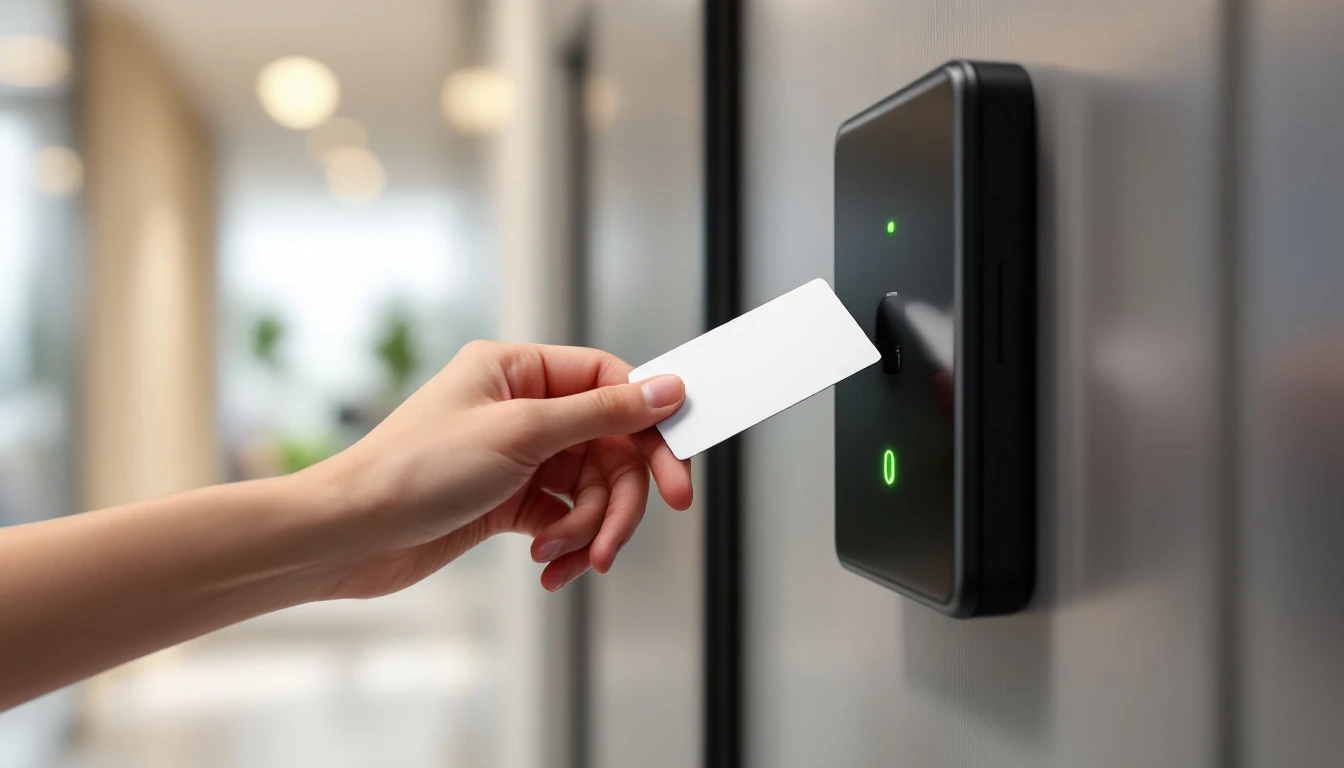
Los Angeles Access Control provides professional key card system installation for commercial and residential properties in Diamond Bar. From design through programming, a single accountable crew manages the whole project — cabling, locks, readers and credentials included.
Reach us now at (888) 917-9811 to get a no-obligation estimate. We pick up Sunday through Thursday from 6:30 AM to 11:30 PM and Friday until 4 PM, so an actual technician-dispatcher handles your call, not an answering service.
Serving Diamond Bar and the San Gabriel Valley
Dispatching Diamond Bar daily means we quote accurately the first time. Buildings around Grand Avenue tend to combine old risers with modern suite build-outs, and we carry the adapters and hardware that those jobs demand. With quick access to the SR-57, same-day calls in 91765 are reached quickly.
Operators with sites in neighboring Walnut or Pomona can put everything under one service relationship — uniform hardware standards and consolidated billing across the San Gabriel Valley.
What usually goes wrong (and how we fix it)
Lost cards that can't be deactivated. Correct design removes this risk — usually within one scheduled visit.
Badges that stop reading. A properly engineered system eliminates this entirely — often in a single service visit.
Legacy readers failing intermittently. The right hardware and programming make this a non-issue — often in a single service visit.
Cloned low-frequency cards. A properly engineered system eliminates this entirely — usually in a single service visit.
If any of these sound familiar Phone (888) 917-9811 and tell us what's happening — a tech can usually narrow it down before rolling a truck, which keeps the visit short and the invoice small.
A quick glossary
OSDP — the modern, encrypted reader protocol replacing legacy Wiegand wiring closing known attack paths on the reader wire.
Anti-passback — logic that stops one fob from being passed back to admit a second person, common in garages and secured floors.
Door position switch (DPS) — the contact that tells the system the door's true state, enabling held-open and forced-door alarms.
Credential — whatever unlocks the door: fob, badge, code, smartphone or biometric. Modern encrypted credentials resist the cloning that plagues older prox cards.
Request-to-exit (REX) — the sensor or button that releases a locked door from inside so egress is always free.
Access level — which doors, at which times, for which users. Most messy systems are really access-level design failures.
From first call to final walkthrough
1. Walkthrough. A technician walks every door, gate and opening in scope, recording door and frame construction, existing wiring, power availability and network paths. This produces a detailed scope and quote — no vague allowances.
2. Engineering. We pair specific hardware per door, size power supplies with battery backup, map panel locations, and confirm fire and egress code compliance before anything is ordered.
3. The install. Our crew — never day labor — pull and label every cable, mount hardware square and solid, and keep the site workable so your operation never stops.
4. Configuration. Users, schedules and access levels are configured, time zones and holidays programmed, alerts configured, and any integrations brought online.
5. Commissioning. Each opening is tested under power loss, egress and forced-entry conditions, and your administrators are trained hands-on — with documentation left on site and on file with us.
6. Service after the sale. We keep your as-builts, programming records and parts list on file, which means any tech we send already knows your site. Maintenance plans are available but never required.
Buyer's guide: pitfalls we see constantly
No documentation. When the installer vanishes, undocumented systems become hostage situations. Documentation should be a deliverable, not a favor.
Leftover legacy credentials. An upgrade that keeps the old database keeps the old holes. We audit and purge on every system takeover.
Security that traps people. Non-compliant locking fails inspection and endangers occupants. Verify your installer designs for inspection.
Undersized power. Behind most "haunted" systems is a starved power supply — good power is cheap insurance.
Pricing without a site visit. Either the price balloons mid-job or corners get cut. A real survey protects you — ours are free.
When to make the call
Doors get propped because entry is inconvenient — convenience failures become security failures.
Nobody can say how many keys exist for your doors — every unknown copy is an open question about who can walk in.
Your existing system is down more than it's up — the repair-versus-replace math eventually flips.
An incident happened and there's no record of who came in — an event history would have answered it in minutes.
Each departure means another rekey bill — a modern system makes that a click, not a service call.
Any one of these justifies a conversation; two or more mean you're already carrying risk. The call is free: (888) 917-9811.
What Diamond Bar owners type into the search bar
The same need wears many labels: owners type "key card system installation" or "key card entry system", property managers tend toward "proximity card access control" and "door card reader installation". They're all asking the same question — who does this properly in Diamond Bar and answers the phone afterward — and the answer is the same local team: Los Angeles Access Control, (888) 917-9811.
Adjacent jobs the same crew covers spans card access system installation, RFID reader installation, card reader installation, key card entry system installation cost and RFID door entry system. Combining these in a single project almost always costs less than piecemeal calls — one truck roll, one survey, one accountable vendor.
Why Los Angeles Access Control
Transparent pricing. Prices are quoted in writing before work starts. No surprise line items.
Non-proprietary by default. Open standards mean you own your system — though most customers never want anyone else.
Specialists, not generalists. Access control, intercoms, buzzers, maglocks and gate entry are all we do — not a line item for a general electrician.
Backed work. Labor and manufacturer warranties on everything we install, honored without arguments.
Local and accountable. Based at 189 The Grove Drive in Los Angeles, serving every corner of LA County daily. When something needs attention, we're minutes away — not a ticket queue in another state.
Long hours, real answers. Open Sunday–Thursday 6:30 AM–11:30 PM and Friday to 4 PM. Entry failures don't respect business hours, so neither do we.
The security details that separate good installs from bad ones
Weak points get found: a hardened entry next to an unmonitored side door is a diagram of where the loss will happen. Part of every survey is walking the whole perimeter, so spend lands where risk actually lives.
Good design assumes bad days: what happens in a blackout, a network outage, a fire alarm, an earthquake — each has a correct, code-driven answer that gets engineered in, and we test them before handoff, not improvised during the event.
The technology behind the system
Not all credentials are equal: legacy 125 kHz prox cards can be cloned at a mall kiosk, whereas 13.56 MHz smart credentials and mobile credentials use encryption. Part of every survey is a frank read on your current credential security.
Most system failures trace to power: cheap power supplies and neglected batteries are behind most "ghost" problems. We size power with headroom and battery backup as standard — and every service plan includes battery testing.
What does key card system installation cost?
Honest answer: price follows scope — but it's knowable fast. Cost is driven by: how many openings, door and frame construction, wiring distance and pathway difficulty, credential technology, and whether locking hardware must be added or replaced.
Beware quotes that arrive without a site visit: unknowns get billed later one way or another. We survey for free, usually in under an hour, and lock your price in writing.
System choices, compared honestly
Self-contained locks and keypads is the entry point: fine for a storage room or a single office door, though it leaves you without real records or remote control.
Local controllers remain the right call where subscriptions are unwelcome or the network can't reach the cloud — a configuration we install regularly — but they demand someone who owns backups and updates.
Cloud access control swap server headaches for a monthly fee: credentials, schedules and logs live in a web dashboard, local controllers keep decisions at the door even offline. It's what we'd put in our own building — though we'll say so only if it actually fits yours.
Not sure where you land? That's what the free survey answers — our recommendation is the least system that fully solves the problem, with reasoning you can hold us to. (888) 917-9811.
Who uses this service
Hospitals and clinics — a property type we've equipped many times across LA County, with proven hardware packages ready to quote.
Universities — a property type we've equipped many times across LA County, with proven hardware packages ready to quote.
Corporate offices — a property type we've equipped many times across LA County, with reference sites we're happy to describe.
Government facilities — where the system is tuned to traffic patterns, user counts and liability exposure, from credential policy to door schedules.
Have an unusual building? We've likely done it — from marinas to machine shops. Describe it at (888) 917-9811 for a straight answer.
What working with us feels like
Door and gate failures ignore business hours, so our dispatch hours are long — Sunday–Thursday 6:30 AM to 11:30 PM and Friday to 4 PM — and same-day slots are held for genuine emergencies: failed storefront locks, stuck gates, dead lobby entries. Tell the dispatcher the symptom and you'll get an honest triage — if it can safely wait for a standard slot, we'll tell you.
The test of a contractor is the second call: we schedule warranty work with the same urgency as paid work, and your site records mean any of our techs can pick up where the last left off.
Local coverage, spelled out
Jobs here run across ZIP code 91765, including Diamond Bar Boulevard and Grand Avenue plus the Country Estates gates. As part of our San Gabriel Valley routes, minutes from the SR-57, response windows here are among our best.
Just outside Diamond Bar, we're equally active in Walnut, Pomona, San Dimas, Charter Oak and La Verne. Routes frequently chain these areas together, which is part of why response here stays fast.
The compliance layer most installers skip
Locking a door electrically touches fire code, building code and ADA at once. State and local codes govern when and how locked doors must let people out: free mechanical egress, fail-safe unlocking on fire alarm, request-to-exit coverage and proper signage where applicable. Compliance is engineered in before security — because people always come before property.
Accessibility is part of it: mounting heights and operator integration all factor into where and how devices mount. Getting it right during design costs nothing; fixing it after a citation is not.
What our key card system installation service includes
Each engagement spans the full stack of equipment: badge printers and credentials, smart card readers, door controllers, plus encoder stations. We don't leave loose ends — wiring is labeled, as-builts are delivered, and your staff is trained before we leave.
The company installs and services industry-standard, non-proprietary equipment by default, which means your building is never hostage to a single manufacturer for future parts and service. If you already own a closed system, we can usually take it over, service it, or migrate it in phases.
Key Card System Installation in Diamond Bar: FAQs
What happens when an employee or tenant leaves?
Their credential is deactivated in seconds — without touching a single lock. For most owners this alone justifies the switch from keys.
Can the system lock and unlock doors on a schedule?
Absolutely: front doors can unlock for business hours and secure themselves at close, including holidays and special dates. The "did anyone lock up?" question disappears.
Will the doors still open if the power goes out?
Yes — by design. Egress is always free: hardware is selected per code so people can always exit, and battery-backed power rides through typical outages. Power-loss behavior is part of our commissioning checklist.
Is financing or phased installation available for larger projects?
Phasing is routine: start with high-risk openings and expand by phase, engineered up front so each phase extends, not reworks.
How fast can you schedule key card system installation in Diamond Bar?
The majority of repairs get same- or next-day slots, and new installations typically begin within days of an approved quote. Phones are answered Sunday–Thursday 6:30 AM–11:30 PM and Friday to 4 PM at (888) 917-9811.
Is key card system installation disruptive to my business while it's installed?
Rarely. We stage work so doors stay usable, and we schedule disruptive steps off-hours, and clean up every day. Occupied buildings are our normal condition.
What areas do you serve?
The whole of Los Angeles County — every region, from Lancaster to Long Beach, including Diamond Bar. If you're unsure, call: (888) 917-9811.
Can I get temporary access for vendors, cleaners or contractors?
Easily: vendors receive limited credentials that expire on their own, with every entry logged. No more lending master keys.
Do you offer maintenance plans?
Yes — preventive visits covering batteries, firmware, testing and documentation, without long lock-in contracts. Plans are optional — our work holds up either way.
Can you integrate with cameras, alarms or my property software?
Yes — video, intrusion, elevator and PMS integrations are routine for us. We'll inventory what you have and tell you exactly what can talk to what.
Do you give free estimates?
Yes — site surveys and quotes are free and carry no obligation. You receive a written scope with real hardware and a fixed price before any work begins.
Are you licensed and insured?
Yes. Los Angeles Access Control is a licensed, insured low-voltage contractor working throughout Los Angeles County, including permitted work where your city requires it.
Can you service a system another company installed?
In most cases, yes. We take over systems whose installer disappeared — stabilizing them, recovering admin access and bringing documentation up to date so you're never stranded again.
Can I manage the system from my phone?
With cloud-based platforms, yes: remote unlock, credential changes and real-time alerts from wherever you are. Ask for a demo at your survey.
Do you handle both installation and ongoing service?
Yes — that's central to how we work. The company that installed your system services it, so every later call is faster and cheaper.
What brands do you install?
Industry-standard platforms such as HID, Brivo, Avigilon Alta (Openpath), DoorKing, ButterflyMX and Axis, plus locking hardware from Von Duprin, HES, Securitron and Schlage. We spec to your building, not to a quota.
How long does an installation take?
One door: usually a day. Multi-door projects run from a few days to a few weeks depending on count and conditions — your written quote includes a schedule, and we keep to it.
More Access Control Systems in Diamond Bar
Key Card System Installation in nearby cities
Explore
Book key card system installation in Diamond Bar
Licensed, insured and local. Fast scheduling across Los Angeles County — written quotes, warrantied work.
Call (888) 917-9811Sun–Thu 6:30 AM–11:30 PM · Fri 6:30 AM–4 PM