
Video Buzzer Entry System in Glendora, CA
Glendora · ZIP 91740, 91741 · San Gabriel Valley · Intercom Systems
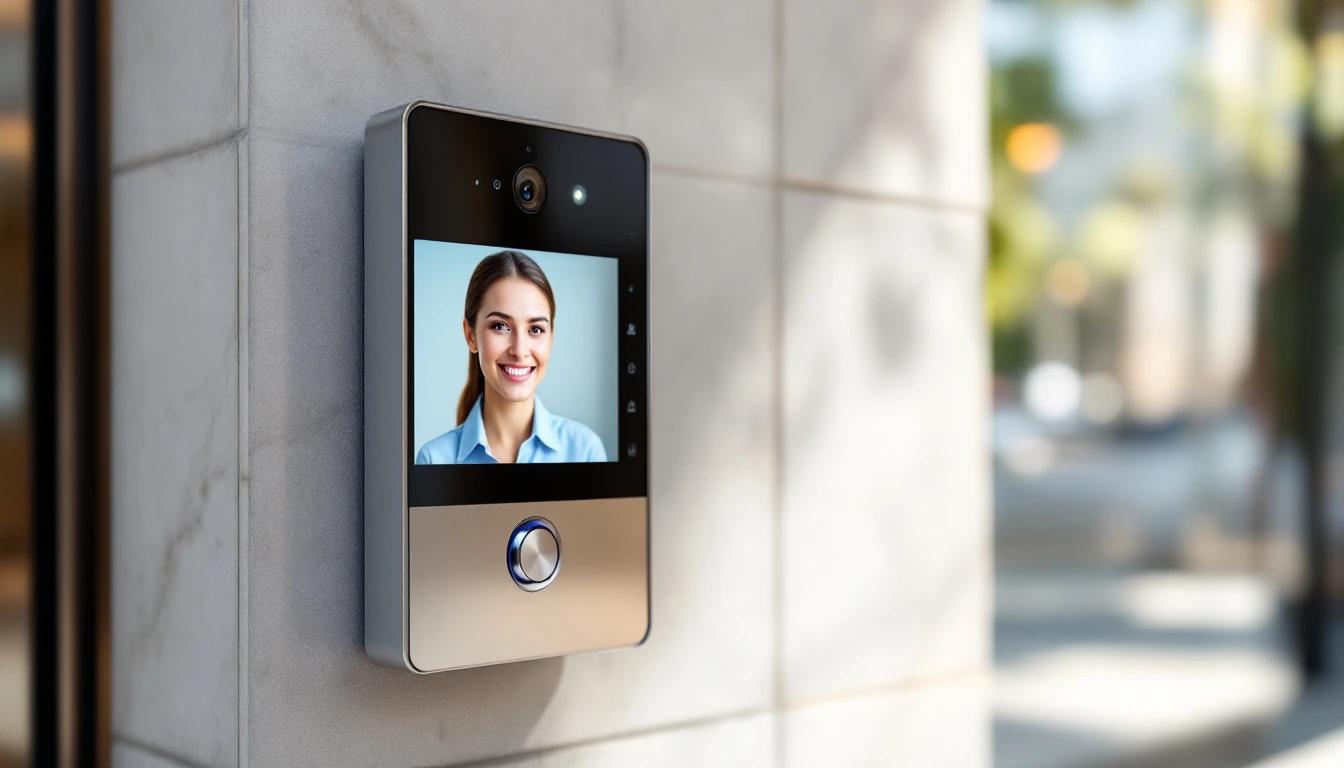
Few things disrupt a property faster than a door that won't lock or won't open. So Glendora building managers turn to Los Angeles Access Control for video buzzer entry system — fast scheduling, transparent quotes, and installations done to code.
Estimates are free, pricing is put in writing before work begins, and labor and parts are warrantied. Dial (888) 917-9811 — we're available Sunday–Thursday 6:30 AM–11:30 PM and Friday 6:30 AM–4 PM.
Video buzzer entry system built for Glendora
Glendora lies in the San Gabriel Valley, and it's part of our daily service routes. From properties near Grand Avenue and Glendora Village, or anywhere along the I-210, we arrive with local knowledge of the building stock common to the 91740 area — everything from frameless glass entries to steel man doors — so the right brackets, strikes and readers are on the truck before we knock.
Property managers with buildings in neighboring Charter Oak or Azusa can put everything under a single service relationship — uniform hardware standards and consolidated billing across the San Gabriel Valley.
Property types we serve in Glendora
Office lobbies — a property type we've equipped many times across LA County, with proven hardware packages ready to quote.
Apartment buildings — where the system is tuned to traffic patterns, user counts and liability exposure, down to schedules and alert rules.
Luxury homes — for which the system is tuned to the way the space is actually used, from credential policy to door schedules.
Mixed-use buildings — a property type we've equipped many times across LA County, with reference sites we're happy to describe.
Have an unusual building? We've likely done it — from marinas to machine shops. Describe it at (888) 917-9811 for a straight answer.
Built to code — fire, egress and ADA
Electrified door hardware lives at the intersection of security and life safety. State and local codes govern when and how locked doors must let people out: motion-sensor REX, push-to-exit buttons, fire-alarm tie-ins and door release on power loss where applicable. We design every opening around those rules first — security never overrides safe exit.
We also document everything: as-built drawings, door schedules, release mechanisms and test records are delivered and kept on file, so fire marshals, insurers and future contractors get answers in minutes.
Our process, step by step
1. Site survey. One of our techs surveys every door, gate and opening in scope, noting door and frame construction, existing wiring, power availability and network paths. You get a written scope and quote — no vague allowances.
2. System design. We select specific hardware per door, size power supplies with battery backup, map panel locations, and confirm fire and egress code compliance before anything is ordered.
3. Installation. Our own employees — not subcontractors — pull and label every cable, mount hardware square and solid, and keep the site workable with minimal disruption.
4. Programming. Credentials are enrolled, time zones and holidays programmed, alarm behaviors tuned, and integrations (video, intercom, elevator) connected.
5. Testing and training. Every credential is tested at every relevant door, and whoever manages the system gets real training — with documentation left on site and on file with us.
6. Service after the sale. Your system's documentation lives in our service records, so future service calls are fast. Preventive maintenance plans are offered but never required.
Mistakes to avoid when buying video buzzer entry system
Undersized power. Behind most "haunted" systems is a starved power supply — proper sizing with battery backup prevents years of mystery faults.
Phone-only quotes. Either the price balloons mid-job or corners get cut. Insist on a walkthrough — we do them free.
Undocumented installs. When the installer vanishes, undocumented systems become hostage situations. Demand as-builts and admin credentials in writing.
Security that traps people. A maglock without compliant release mechanisms is a violation and a liability. Compliance has to be in the design, not patched after.
Leftover legacy credentials. Takeovers that don't purge unknown credentials inherit every old risk. A credential audit belongs in every takeover.
Common Glendora video buzzer entry system problems — solved
Package theft at entries. A properly engineered system eliminates this entirely — usually within one scheduled visit.
No visual record of who was buzzed in. Correct design removes this risk — often within one scheduled visit.
Old black-and-white monitors failing. It's among our most common calls — and our fix addresses the root cause, not the symptom.
Tenants answering from landlines only. The right hardware and programming make this a non-issue — often within one scheduled visit.
If any of these sound familiar Phone (888) 917-9811 and describe the symptom — many issues are identified before we even arrive, which keeps the visit short and the invoice small.
One service, many names: what people search for
However you got here — searching "video intercom for apartment building", "video entry system installation", "video intercom installation" or something close — the underlying work is the same: professional video buzzer entry system done once, done right, in Glendora.
Adjacent jobs the same crew covers includes video buzzer entry system, video door entry system, smartphone intercom system installation. Bundling related scopes into one visit beats hiring for them one at a time — shared labor, shared wiring, one warranty.
What makes us different
Long hours, real answers. Available Sunday–Thursday 6:30 AM–11:30 PM and Friday to 4 PM. Because locked-out tenants and failed storefront doors can't wait until Monday.
No vendor lock-in. We install open-platform systems you could have anyone service — though most customers never want anyone else.
A real local company. Based at 189 The Grove Drive in Los Angeles, serving every corner of LA County daily. Service calls get a truck, not a ticket number.
Written, flat quotes. Prices are quoted in writing before work starts. Change orders only happen when you change the scope.
Warrantied workmanship. Labor and manufacturer warranties on everything we install, honored without arguments.
Specialists, not generalists. Entry systems are our entire business — not a line item for a general electrician.
What "secure" actually requires
Attackers go around strong points, not through them: a maglock on a door whose glass sidelite opens with a rock, or a secured front door beside a propped loading dock, is theater. Part of every survey is walking the whole perimeter, so spend lands where risk actually lives.
Monitoring turns hardware into security: held-open alerts, forced entries, credential misuse patterns reach the right person in real time, instead of being discovered in a log after the loss. Alert tuning is included in every install.
Early warnings worth acting on
People prop doors to avoid fumbling with keys — and a propped door defeats every lock you own.
Repairs on the old system are becoming routine — past a point, stabilizing legacy hardware costs more than replacing it.
An incident happened and there's no record of who came in — an event history would have answered it in minutes.
Nobody can say how many keys exist for your doors — each one is standing access you can't revoke.
Each departure means another rekey bill — electronic credentials turn that into a ten-second software change.
Any one of these justifies a conversation; stacking several means the risk is live. A phone consult costs nothing: (888) 917-9811.
Pricing factors for video buzzer entry system
The honest answer: price follows scope — but it's knowable fast. The main drivers are: number of doors or gates, what each door is made of, wiring distance and pathway difficulty, credential technology, and the locking hardware each opening needs.
As a ballpark: one standalone door is the least expensive configuration; multi-door networked systems add per-door cost with shared head-end; cloud systems trade some hardware cost for subscription; and gates, intercoms and integrations are priced per device. A free site survey produces an exact written quote — schedule at (888) 917-9811.
System choices, compared honestly
Single-door standalone systems suit one or two doors with simple needs: self-contained hardware with onboard programming. What you give up is central control — changes happen at the door, and there's little or no audit trail.
Local controllers still win where subscriptions are unwelcome or the network can't reach the cloud — a configuration we install regularly — with the caveat that software upkeep falls on you or a service plan.
Cloud access control swap server headaches for a monthly fee: credentials, schedules and logs live in a web dashboard, local controllers keep decisions at the door even offline. It's what we'd put in our own building — unless your situation argues otherwise.
Unsure which fits? The free site survey settles it — our recommendation is the least system that fully solves the problem, and put the reasoning in writing. (888) 917-9811.
Inside a professional video buzzer entry system project
Each engagement covers the whole system of components: cloud video storage, mobile apps, HD video entry panels, as well as touchscreen directories. We don't leave half-finished systems — wiring is labeled, as-builts are delivered, and your staff is trained before we leave.
The company installs and services industry-standard, non-proprietary equipment wherever possible, so your building is never hostage to a single manufacturer for credentials, parts or service. When a proprietary legacy system is already in place, we take over, stabilize and migrate it on your schedule.
Response times and scheduling in Glendora
Entry failures rarely pick convenient moments, which is why we answer — Sunday–Thursday 6:30 AM to 11:30 PM and Friday to 4 PM — with same-day capacity reserved for urgent calls: a storefront that won't lock, a gate stuck open, a lobby door trapping deliveries. Tell the dispatcher the symptom and you'll get an honest triage — not everything needs an emergency rate, and we'll say so.
The test of a contractor is the second call: warranty visits get the same priority as new sales, and your site records mean any of our techs can pick up where the last left off.
Coverage details: ZIP codes, corridors and surrounding areas
Jobs here run across ZIP codes 91740 and 91741, taking in Glendora Village and Route 66 plus Grand Avenue. Positioned in the San Gabriel Valley, with the I-210 nearby, response windows here are among our best.
Beyond the city line, we're equally active in Charter Oak, Azusa, Covina, San Dimas as well as Irwindale. Routes frequently chain these areas together, which is part of why response here stays fast.
Equipment standards we trust
Credential technology matters more than most owners realize: old low-frequency prox is trivially copied, whereas modern smart cards and phone credentials are encrypted. We'll tell you plainly which you have and what it would take to upgrade.
Behind the walls, we're moving customers from Wiegand to OSDP — supervised, encrypted reader communication that resists skimming and cut-wire attacks. Most modern readers support it already; we verify compatibility during the survey.
Terms you'll hear during the project
OSDP — the modern, encrypted reader protocol replacing legacy Wiegand wiring that resists skimming and tamper.
Fail-safe vs. fail-secure — the lock's behavior on power loss: fail-safe releases (required for some egress doors), fail-secure stays locked (most strikes). Choosing per-door is a design decision, not a default.
Credential — whatever unlocks the door: fob, badge, code, smartphone or biometric. Modern encrypted credentials resist the cloning that plagues older prox cards.
Door position switch (DPS) — the contact that tells the system the door's true state, enabling held-open and forced-door alarms.
Anti-passback — logic that stops one fob from being passed back to admit a second person, used in parking and high-security zones.
Request-to-exit (REX) — the sensor or button that releases a locked door from inside so egress is always free.
Video Buzzer Entry System in Glendora: FAQs
How fast can you schedule video buzzer entry system in Glendora?
Most service calls are scheduled same-day or next-day, and new installations typically begin within days of an approved quote. We answer Sunday–Thursday 6:30 AM–11:30 PM and Friday to 4 PM at (888) 917-9811.
Do you offer maintenance plans?
Yes — scheduled inspections, battery replacement, firmware updates and priority response, without long lock-in contracts. No plan is ever required — the install is built to last regardless.
What happens when an employee or tenant leaves?
You deactivate the fob, card or phone credential instantly — without touching a single lock. For most owners this alone justifies the switch from keys.
What brands do you install?
Industry-standard platforms such as HID, Brivo, Avigilon Alta (Openpath), DoorKing, ButterflyMX and Axis, plus locking hardware from Von Duprin, HES, Securitron and Schlage. We spec to your building, not to a quota.
Do you handle both installation and ongoing service?
Yes — and that continuity is the point. The company that installed your system services it, so every later call is faster and cheaper.
Are you licensed and insured?
Absolutely. Los Angeles Access Control operates as a licensed and insured contractor performing work across Los Angeles County, and we pull permits where the jurisdiction requires them.
Will the doors still open if the power goes out?
Yes — by design. Exiting is always possible: fail-safe hardware unlocks on power loss where code requires, and battery backup keeps systems running through outages. Power-loss behavior is part of our commissioning checklist.
What if my building already has old wiring from a previous system?
Often good news: sound existing cable can frequently be reused, which meaningfully reduces install cost. The survey includes testing what's in the walls — reuse what passes, replace what doesn't.
Do you give free estimates?
Yes — estimates cost nothing and you're never pressured. You receive a written scope with real hardware and a fixed price before any work begins.
Is video buzzer entry system disruptive to my business while it's installed?
Minimally. Openings are kept functional during the day, schedule noisy or door-down phases around your hours, and leave the site clean daily. Most of our work happens in occupied, operating buildings.
Can you service a system another company installed?
In most cases, yes. We take over systems whose installer disappeared — identifying the hardware, recovering or resetting programming, and documenting everything properly so you're never stranded again.
Can I manage the system from my phone?
With cloud-based platforms, yes: remote unlock, credential changes and real-time alerts from wherever you are. We'll show you a live demo before you decide.
Can you integrate with cameras, alarms or my property software?
In most cases, yes — video, intrusion, elevator and PMS integrations are routine for us. Bring your current system list to the survey and we'll map what connects.
How long does an installation take?
One door: usually a day. Multi-door projects run from a few days to a few weeks depending on count and conditions — the timeline is part of your written proposal, and we keep to it.
Can the system lock and unlock doors on a schedule?
Yes — schedules are standard: auto-unlock during business hours, auto-secure at night, with holiday calendars and exception dates handled automatically. The "did anyone lock up?" question disappears.
More Intercom Systems in Glendora
Video Buzzer Entry System in nearby cities
Explore
Book video buzzer entry system in Glendora
Licensed, insured and local. Fast scheduling across Los Angeles County — written quotes, warrantied work.
Call (888) 917-9811Sun–Thu 6:30 AM–11:30 PM · Fri 6:30 AM–4 PM