
Panic Hardware Repair in Hermosa Beach, CA
Hermosa Beach · ZIP 90254 · South Bay · Magnetic Locks & Electric Strikes
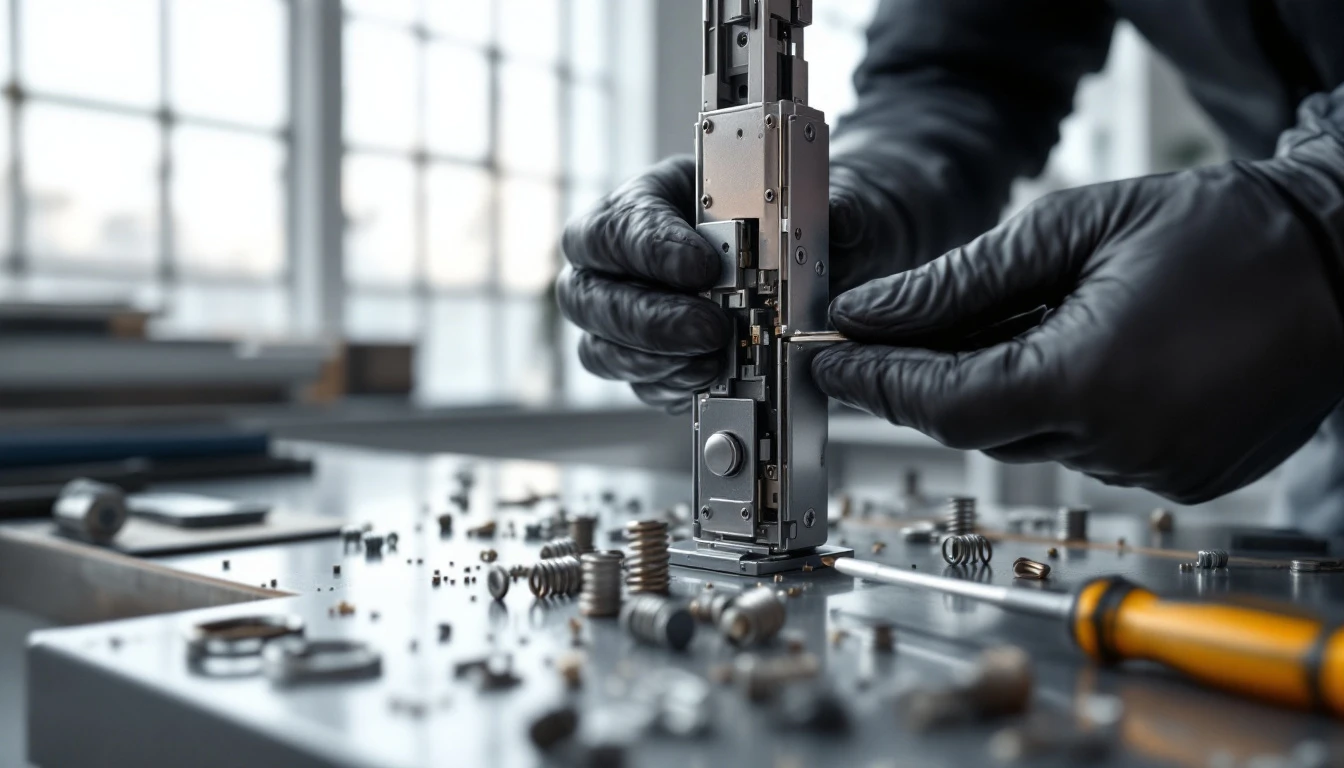
Los Angeles Access Control provides professional panic hardware repair to commercial and residential properties in Hermosa Beach. From the first site walk to the final walkthrough, our own technicians own the entire project — wiring, hardware, software and training included.
Reach us directly at (888) 917-9811 to get a no-obligation quote. We take calls seven days' worth of long hours — 6:30 AM to 11:30 PM Sunday–Thursday, Fridays to 4 PM, so a real person takes your call, not an answering service.
Panic hardware repair built for Hermosa Beach
Covering Hermosa Beach daily means we quote accurately the first time. Properties near the Hermosa Beach Strand tend to combine old risers with modern suite build-outs, and our techs carry the interface modules, power supplies and retrofit brackets that those jobs demand. Being minutes off the PCH, emergency calls in 90254 get fast response.
In addition to Hermosa Beach, the same crew covers Redondo Beach, Manhattan Beach, Lawndale and El Segundo, which means businesses with several locations enjoy a single point of contact across every site: (888) 917-9811.
Hardware and platforms we work with
Not all credentials are equal: legacy 125 kHz prox cards can be cloned at a mall kiosk, while 13.56 MHz smart credentials and mobile credentials use encryption. We'll tell you plainly which you have and what it would take to upgrade.
Power is the silent failure point: cheap power supplies and neglected batteries are behind most "ghost" problems. We size power with headroom and battery backup as standard — and batteries get tested on every maintenance visit.
The compliance layer most installers skip
Locking a door electrically touches fire code, building code and ADA at once. California's Building Code and Fire Code dictate how locked egress doors must release: free mechanical egress, fail-safe unlocking on fire alarm, request-to-exit coverage and proper signage where applicable. Compliance is engineered in before security — because people always come before property.
Documentation is part of compliance: riser diagrams and test logs are delivered and kept on file, so fire marshals, insurers and future contractors get answers in minutes.
What to expect when you hire us
1. Site survey. We evaluate every door, gate and opening in scope, documenting door and frame construction, existing wiring, power availability and network paths. You get a written scope and quote — with real model numbers.
2. Engineering. We select specific hardware per door, size power supplies with battery backup, map panel locations, and verify life-safety compliance before anything is ordered.
3. Installation. Our crew — never day labor — pull and label every cable, fit hardware precisely, and keep the site workable so your operation never stops.
4. Programming. Credentials are enrolled, auto-lock and unlock schedules set, alerts configured, and integrations (video, intercom, elevator) connected.
5. Testing and training. Every credential is tested at every relevant door, and your administrators are trained hands-on — plus written documentation.
6. Service after the sale. Your system's documentation lives in our service records, which means any tech we send already knows your site. Preventive maintenance plans are offered but never required.
The security details that separate good installs from bad ones
A reader on the wall isn't security by itself. What decides it: is the lock's wiring exposed on the unsecured side? will a propped door raise an alarm? Are credentials encrypted or clonable? Is the controller on battery backup? Every one of those questions has a deliberate answer in our designs.
Good design assumes bad days: power loss, dead internet, alarm activation — each has a correct, code-driven answer that gets engineered in, and we test them before handoff, not during the real thing.
Early warnings worth acting on
Repairs on the old system are becoming routine — past a point, stabilizing legacy hardware costs more than replacing it.
Doors get propped because entry is inconvenient — and a propped door defeats every lock you own.
An auditor wants access records you don't have — documented access control is becoming table stakes in many industries.
Nobody can say how many keys exist for your doors — each one is standing access you can't revoke.
Staff or tenant turnover triggers a locksmith visit every time — electronic credentials turn that into a ten-second software change.
Any one of these justifies a conversation; two or more mean you're already carrying risk. The call is free: (888) 917-9811.
However you phrase it, this is the page
People describe this work a dozen different ways: some search "push bar repair" while others try "fix push bar on commercial door", property managers tend toward "commercial exit door repair" and "crash bar repair". They're all asking the same question — who does this properly in Hermosa Beach and answers the phone afterward — and the answer is the same local team: Los Angeles Access Control, (888) 917-9811.
Nearby needs we're asked about on the same calls include push bar not latching, push bar dogging repair, panic bar replacement, panic bar repair and panic bar won't open. Raise them at the survey — scoping them together is where the savings hide.
The reasons customers stay with us
Backed work. Every installation carries labor and parts warranties, honored fast.
Local and accountable. Headquartered at 189 The Grove Drive in Los Angeles, with techs living and working across the county. Service calls get a truck, not a ticket number.
Specialists, not generalists. Access control, intercoms, buzzers, maglocks and gate entry are all we do — not a sideline bolted onto an alarm company.
No vendor lock-in. We install open-platform systems you could have anyone service — though most customers never want anyone else.
Transparent pricing. The number you approve is the number you pay. No surprise line items.
Long hours, real answers. Available Sunday–Thursday 6:30 AM–11:30 PM and Friday to 4 PM. Entry failures don't respect business hours, so neither do we.
Comparing your options
Standalone hardware is the entry point: right for very small scopes, but it doesn't scale and rarely logs anything useful.
Server-based systems put every door on one brain: rich features, deep integrations, no subscriptions, at the cost of maintaining the server and software yourself. They shine in facilities that already have IT staff.
Cloud-managed systems now dominate new installs: remote unlock, instant credential changes and automatic updates with no server to babysit. The subscription is the trade, and for most owners it replaces costs they were already paying in service calls.
Unsure which fits? The free site survey settles it — we'll recommend the cheapest option that actually solves your problem, and put the reasoning in writing. (888) 917-9811.
Panic hardware repair: what we install and service
Every engagement includes the whole system of hardware: alarm modules and batteries, vertical rods and bottom bolts, dogging mechanisms, along with latch and strike assemblies. We don't leave half-finished systems — wiring is labeled, panels are documented, and administrators are trained before we leave.
We work with open, non-proprietary platforms by default, which means your building is never hostage to a single manufacturer for future parts and service. When you already own a closed system, we take over, stabilize and migrate it on your schedule.
Budgeting for panic hardware repair
No two buildings price alike because conditions behind the walls differ. That's why we quote from a real site walk, not a phone script — the number is accurate and it's in writing.
Be cautious with quotes that arrive without a site visit: unknowns get billed later one way or another. We survey for free, take under an hour for most properties, and lock your price in writing.
Typical applications
Industrial exits — for which the system is tuned to the way the space is actually used, from credential policy to door schedules.
Retail storefronts — for which we tailor the way the space is actually used, from credential policy to door schedules.
Offices — for which the system is tuned to the way the space is actually used, down to schedules and alert rules.
Gyms — where we tailor traffic patterns, user counts and liability exposure, from credential policy to door schedules.
Running something different? Odds are we've equipped one like it — from marinas to machine shops. Call (888) 917-9811 for a straight answer.
Key terms, plainly explained
Request-to-exit (REX) — the sensor or button that releases a locked door from inside so egress is always free.
Access level — which doors, at which times, for which users. Most messy systems are really access-level design failures.
Anti-passback — a rule preventing a credential from entering twice without exiting, used in parking and high-security zones.
Fail-safe vs. fail-secure — the lock's behavior on power loss: fail-safe unlocks (maglocks), fail-secure holds (typical for perimeter security). Choosing per-door is a design decision, not a default.
Credential — whatever unlocks the door: fob, badge, code, smartphone or biometric. Encryption level varies wildly between credential generations.
OSDP — an encrypted, supervised successor to Wiegand that resists skimming and tamper.
Scheduling, emergencies and follow-through
Entry failures rarely pick convenient moments, so our dispatch hours are long — Sunday–Thursday 6:30 AM to 11:30 PM and Friday to 4 PM — with same-day capacity reserved for urgent calls: failed storefront locks, stuck gates, dead lobby entries. Tell the dispatcher the symptom and you'll get an honest triage — if it can safely wait for a standard slot, we'll tell you.
After the job, the relationship continues: your documentation stays on file, warranty support is a phone call, and future additions quote quickly because we already know your site.
Coverage details: ZIP codes, corridors and surrounding areas
Our Hermosa Beach service area covers the entirety of ZIP code 90254 — including the areas near Pier Avenue to the Hermosa Beach Strand, out to Hermosa Pier. Storefronts, offices, multifamily buildings and homes alike get the same response standard, reached via the PCH.
The same panic hardware repair service extends to: Redondo Beach, Manhattan Beach, Lawndale, El Segundo and Palos Verdes Estates. Multi-property owners across these cities typically put everything under one account — a single point of contact: (888) 917-9811.
Mistakes to avoid when buying panic hardware repair
Proprietary lock-in. Some vendors install hardware only they can service. Always ask: "who else can work on this?"
Ignoring egress code. Non-compliant locking fails inspection and endangers occupants. Verify your installer designs for inspection.
Undersized power. Behind most "haunted" systems is a starved power supply — proper sizing with battery backup prevents years of mystery faults.
Undocumented installs. When the installer vanishes, undocumented systems become hostage situations. Documentation should be a deliverable, not a favor.
Old cards left active. Takeovers that don't purge unknown credentials inherit every old risk. A credential audit belongs in every takeover.
Common Hermosa Beach panic hardware repair problems — solved
Exit door that won't open under pressure. The right hardware and programming make this a non-issue — often faster than owners expect.
Vertical rods out of adjustment on double doors. Correct design removes this risk — usually in a single service visit.
Panic bar stuck or jammed. A properly engineered system eliminates this entirely — often in a single service visit.
Dogging feature no longer holding the latch open. It's among our most common calls — and the repair includes the reason it failed.
Left alone, these issues get costlier: a door that fails unlocked is a security hole, and one that fails locked is a code violation. Same-day and next-day appointments are usually available at (888) 917-9811.
Panic Hardware Repair in Hermosa Beach: FAQs
Can you integrate with cameras, alarms or my property software?
Yes — video, intrusion, elevator and PMS integrations are routine for us. We'll inventory what you have and tell you exactly what can talk to what.
Can you service a system another company installed?
Usually, yes. We regularly take over systems whose installer disappeared — identifying the hardware, recovering or resetting programming, and documenting everything properly so you're never stranded again.
Do you work on occupied buildings without disrupting tenants?
Yes, most of our work is in occupied buildings. Doors stay usable during the day, noisy work is scheduled considerately, and tenants get notice through management.
What if my building already has old wiring from a previous system?
Usually that helps: sound existing cable can frequently be reused, which meaningfully reduces install cost. We verify every run before trusting it — only what fails gets replaced.
What happens to my system if your company weren't around?
A fair question for any vendor: open platforms, delivered documentation and your own admin access mean any qualified integrator could take over. We earn retention through service, not hostage-taking.
What happens when an employee or tenant leaves?
You deactivate the fob, card or phone credential instantly — no rekeying, no lock changes, no cost. For most owners this alone justifies the switch from keys.
How long does an installation take?
One door: usually a day. Multi-door projects run from a few days to a few weeks depending on count and conditions — the timeline is part of your written proposal, and we hit it.
Do you give free estimates?
Yes — estimates cost nothing and you're never pressured. The quote lists actual equipment and a locked price before any work begins.
Do you handle both installation and ongoing service?
Yes — that's central to how we work. Your as-builts, programming records and parts list stay in our file, which makes every future visit faster.
Can I get temporary access for vendors, cleaners or contractors?
Easily: a cleaning crew gets specific doors, specific hours, auto-expiring, and every use is logged. No more lending master keys.
How fast can you schedule panic hardware repair in Hermosa Beach?
Most repairs get same- or next-day slots, and new installations typically begin within days of an approved quote. Phones are answered Sunday–Thursday 6:30 AM–11:30 PM and Friday to 4 PM at (888) 917-9811.
Are you licensed and insured?
Absolutely. Los Angeles Access Control is a licensed, insured low-voltage contractor working across Los Angeles County, and we pull permits where the jurisdiction requires them.
Will the doors still open if the power goes out?
Yes — by design. Exiting is always possible: hardware is selected per code so people can always exit, and battery-backed power rides through typical outages. Power-loss behavior is part of our commissioning checklist.
Can I manage the system from my phone?
On modern cloud systems, absolutely: unlock doors remotely, grant visitor access, review events and get alerts from wherever you are. Ask for a demo at your survey.
What brands do you install?
Industry-standard platforms such as HID, Brivo, Avigilon Alta (Openpath), DoorKing, ButterflyMX and Axis, plus locking hardware from Von Duprin, HES, Securitron and Schlage. The building's needs pick the brand.
Is panic hardware repair disruptive to my business while it's installed?
Minimally. Openings are kept functional during the day, and we schedule disruptive steps off-hours, and clean up every day. Most of our work happens in occupied, operating buildings.
Do you offer maintenance plans?
Yes — preventive visits covering batteries, firmware, testing and documentation, on terms you can cancel. Plans are optional — the install is built to last regardless.
More Magnetic Locks & Electric Strikes in Hermosa Beach
Panic Hardware Repair in nearby cities
Explore
Book panic hardware repair in Hermosa Beach
Licensed, insured and local. Fast scheduling across Los Angeles County — written quotes, warrantied work.
Call (888) 917-9811Sun–Thu 6:30 AM–11:30 PM · Fri 6:30 AM–4 PM