
Card Reader Installation in Highland Park, CA
Highland Park · ZIP 90042 · Northeast Los Angeles · Access Control Systems
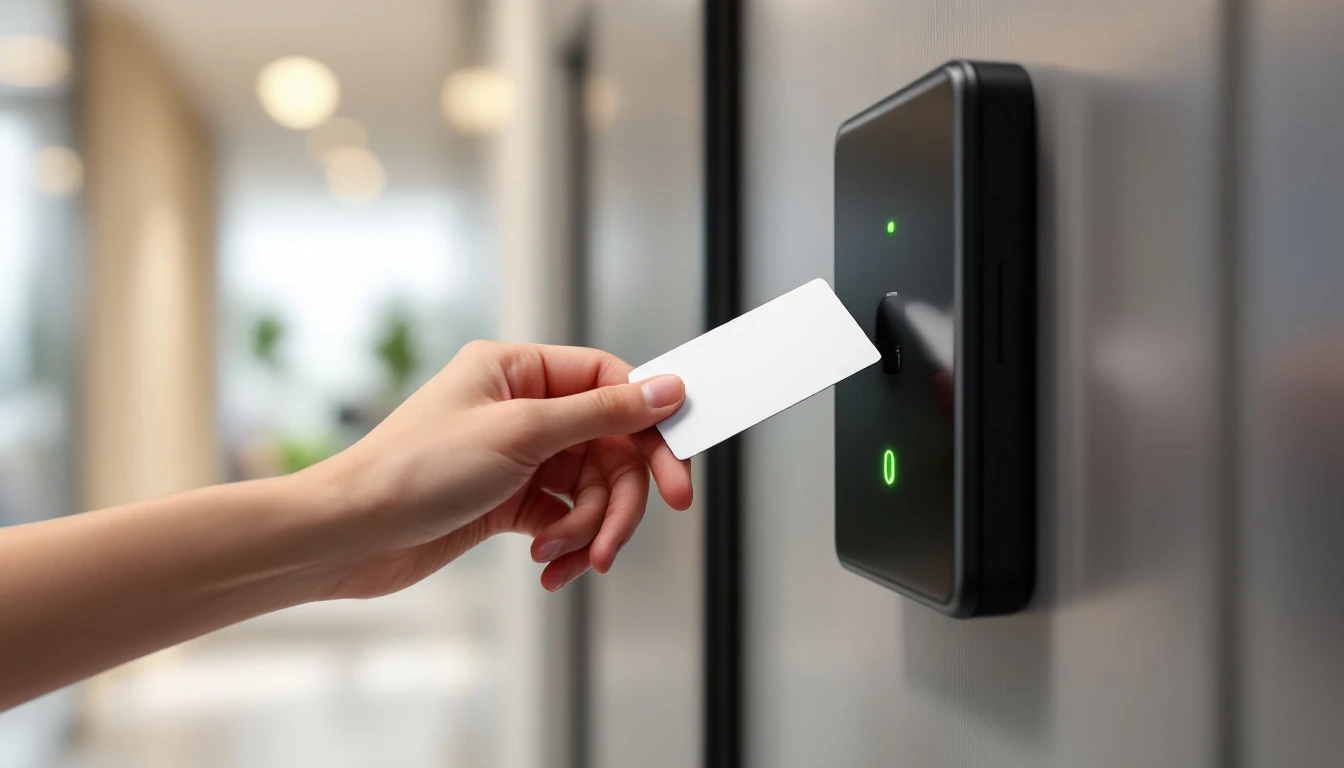
Looking for card reader installation in Highland Park, you deserve a qualified low-voltage contractor who arrives with the right hardware on the truck — not a call center that resells your job to the lowest bidder. Los Angeles Access Control installs, programs and maintains entry systems throughout Highland Park and the surrounding communities, and every project is handled by in-house techs, start to finish.
Call us today at (888) 917-9811 for a free quote. We take calls seven days' worth of long hours — 6:30 AM to 11:30 PM Sunday–Thursday, Fridays to 4 PM, so a local human takes your call, not an answering service.
Serving Highland Park and the Northeast Los Angeles
Highland Park lies in the Northeast Los Angeles, and it's part of our daily service routes. From properties near Figueroa Street or the Highland Park Metro Gold Line stops, and anywhere along the SR-110, we arrive already familiar with the construction styles found across the 90042 area — everything from frameless glass entries to steel man doors — so the right brackets, strikes and readers are on the truck before we knock.
Beyond Highland Park, the same team covers Mount Washington, Eagle Rock, El Sereno and South Pasadena, so multi-site owners enjoy one vendor, one standard, one phone number: (888) 917-9811.
A quick glossary
Fail-safe vs. fail-secure — what a lock does when power drops: fail-safe releases (maglocks), fail-secure holds (most strikes). Choosing per-door is a design decision, not a default.
Request-to-exit (REX) — the sensor or button that releases a locked door from inside so egress is always free.
Anti-passback — logic that stops one fob from being passed back to admit a second person, common in garages and secured floors.
Door position switch (DPS) — the contact that tells the system the door's true state, enabling held-open and forced-door alarms.
Credential — the thing you present: card, fob, PIN, phone or fingerprint. Modern encrypted credentials resist the cloning that plagues older prox cards.
OSDP — an encrypted, supervised successor to Wiegand closing known attack paths on the reader wire.
Problems we solve every week
Cloned low-frequency cards. The right hardware and programming make this a non-issue — often within one scheduled visit.
Legacy readers failing intermittently. A properly engineered system eliminates this entirely — usually in a single service visit.
Badges that stop reading. Correct design removes this risk — usually within one scheduled visit.
Lost cards that can't be deactivated. It's among our most common calls — so our fix addresses the root cause, not the symptom.
Recognize one of these? Call (888) 917-9811 and tell us what's happening — a tech can usually narrow it down before rolling a truck, saving you time on site.
How a card reader installation project works
1. Site survey. One of our techs surveys every door, gate and opening in scope, recording door and frame construction, existing wiring, power availability and network paths. This produces an itemized scope and quote — no vague allowances.
2. Engineering. We pair hardware for each opening, calculate power budgets, map panel locations, and verify life-safety compliance before anything is ordered.
3. The install. In-house technicians — not subcontractors — run cabling cleanly, mount hardware square and solid, and work around your business hours so your operation never stops.
4. Configuration. Users, schedules and access levels are configured, auto-lock and unlock schedules set, alerts configured, and any integrations brought online.
5. Testing and training. Each opening is tested under power loss, egress and forced-entry conditions, and your administrators are trained hands-on — plus written documentation.
6. Service after the sale. We keep your as-builts, programming records and parts list on file, so future service calls are fast. Maintenance plans are available without lock-in contracts.
The compliance layer most installers skip
Locking a door electrically touches fire code, building code and ADA at once. California's Building Code and Fire Code dictate when and how locked doors must let people out: motion-sensor REX, push-to-exit buttons, fire-alarm tie-ins and door release on power loss where applicable. Compliance is engineered in before security — security never overrides safe exit.
Documentation is part of compliance: riser diagrams and test logs are delivered and kept on file, so fire marshals, insurers and future contractors get answers in minutes.
Where card reader installation makes the biggest difference
Corporate offices — where we tailor the way the space is actually used, from credential policy to door schedules.
Government facilities — where we tailor the way the space is actually used, down to schedules and alert rules.
Hotels — one of our most frequent project types, with reference sites we're happy to describe.
Universities — a property type we've equipped many times across LA County, with reference sites we're happy to describe.
Don't see your property type? We've likely done it — from houses of worship to film stages. Describe it at (888) 917-9811 for a straight answer.
One service, many names: what people search for
The same need wears many labels: owners type "key card access control" or "RFID access control", property managers tend toward "door card reader installation" or "proximity card access control". They're all asking the same question — who can design, install and stand behind this in Highland Park — and the answer is the same local team: Los Angeles Access Control, (888) 917-9811.
Questions that ride along with this one include badge access control, RFID door entry system, smart card access control, RFID reader installation and card reader installation. If any of those apply to your property, mention them during the survey — scoping them together is where the savings hide.
Why Highland Park calls us first
A real local company. Headquartered at 189 The Grove Drive in Los Angeles, with techs living and working across the county. Service calls get a truck, not a ticket number.
Warrantied workmanship. Every installation carries labor and parts warranties, honored fast.
Non-proprietary by default. Open standards mean you own your system — though most customers never want anyone else.
Long hours, real answers. Open Sunday–Thursday 6:30 AM–11:30 PM and Friday to 4 PM. Entry failures don't respect business hours, so neither do we.
Transparent pricing. The number you approve is the number you pay. No surprise line items.
One trade, deep focus. Access control, intercoms, buzzers, maglocks and gate entry are all we do — not a sideline bolted onto an alarm company.
Beyond the reader: real-world security engineering
A reader on the wall isn't security by itself. What decides it: is the lock's wiring exposed on the unsecured side? Does the door report when it's propped? can the cards be cloned at a kiosk? Is the controller on battery backup? Every one of those questions has a deliberate answer in our designs.
Think about failure modes before they happen: what happens in a blackout, a network outage, a fire alarm, an earthquake — each has a correct, code-driven answer that gets engineered in, tested during commissioning, not improvised during the event.
System choices, compared honestly
Single-door standalone systems suit small scopes: self-contained hardware with onboard programming. The trade-off is management — every change means a walk to the door, and reporting is thin.
On-premise panels still win where subscriptions are unwelcome or the network can't reach the cloud — a configuration we install regularly — with the caveat that software upkeep falls on you or a service plan.
Cloud access control swap server headaches for a monthly fee: credentials, schedules and logs live in a web dashboard, failover keeps doors working through internet outages. It's what we'd put in our own building — unless your situation argues otherwise.
Unsure which fits? The free site survey settles it — our recommendation is the least system that fully solves the problem, with reasoning you can hold us to. (888) 917-9811.
Budgeting for card reader installation
Truthfully, it depends on the opening count and conditions — but it's knowable fast. Cost is driven by: how many openings, door and frame construction, wiring distance and pathway difficulty, reader and credential choice, and the locking hardware each opening needs.
Be cautious with phone-only pricing: unknowns get billed later one way or another. Our surveys are free, take under an hour for most properties, and lock your price in writing.
Card reader installation: what we install and service
We handle everything from encoder stations to badge printers and credentials, down to smart card readers and proximity card readers. Because one team handles hardware, low-voltage wiring and software alike, nothing falls between vendors.
Each entry point receives hardware matched to its construction: fail-safe or fail-secure locking chosen per egress requirements, weather- and vandal-rated readers where needed, and power sized with headroom for battery backup. Skipping that engineering is why bargain installs fail early — ours are built to run for a decade.
Hardware and platforms we work with
Credential technology matters more than most owners realize: old low-frequency prox is trivially copied, whereas modern smart cards and phone credentials are encrypted. Part of every survey is a frank read on your current credential security.
On the wire side, OSDP is replacing Wiegand — supervised, encrypted reader communication that resists skimming and cut-wire attacks. Most modern readers support it already; we verify compatibility during the survey.
What working with us feels like
Door and gate failures ignore business hours, which is why we answer — Sunday–Thursday 6:30 AM to 11:30 PM and Friday to 4 PM — with same-day capacity reserved for urgent calls: a storefront that won't lock, a gate stuck open, a lobby door trapping deliveries. Tell the dispatcher the symptom and you'll get an honest triage — if it can safely wait for a standard slot, we'll tell you.
Follow-through is where contractors are measured: we schedule warranty work with the same urgency as paid work, and the file we keep on your system means nobody re-learns your building on your dime.
Exactly where we work in and around Highland Park
In Highland Park we cover the entirety of ZIP code 90042 — from the blocks around York Boulevard to Figueroa Street, out to the Highland Park Metro Gold Line stops. Commercial corridors, residential streets and industrial pockets alike see the same technicians and the same pricing, reached via the SR-110.
Bordering communities get identical coverage: Mount Washington, Eagle Rock, El Sereno, South Pasadena and Glassell Park. Multi-property owners across these cities typically put everything under one account — a single point of contact: (888) 917-9811.
Early warnings worth acting on
Your existing system is down more than it's up — the repair-versus-replace math eventually flips.
Something went missing and the entry log is a shrug — an event history would have answered it in minutes.
Insurance, compliance or a client audit is asking questions you can't answer — controlled, logged entry is increasingly a requirement, not a luxury.
You've lost track of how many keys or credentials are in circulation — each one is standing access you can't revoke.
People prop doors to avoid fumbling with keys — and a propped door defeats every lock you own.
One of these alone is reason enough to call; two or more mean you're already carrying risk. A phone consult costs nothing: (888) 917-9811.
Mistakes to avoid when buying card reader installation
Phone-only quotes. The unknowns get billed later or botched. A real survey protects you — ours are free.
Ignoring egress code. A maglock without compliant release mechanisms is a violation and a liability. Verify your installer designs for inspection.
Undocumented installs. When the installer vanishes, undocumented systems become hostage situations. Demand as-builts and admin credentials in writing.
Proprietary lock-in. Certain platforms handcuff you to one company forever. Always ask: "who else can work on this?"
Cheap power supplies. The most common root cause of flaky systems we're called to fix — good power is cheap insurance.
Card Reader Installation in Highland Park: FAQs
What if my building already has old wiring from a previous system?
Usually that helps: sound existing cable can frequently be reused, which cuts labor significantly. We verify every run before trusting it — only what fails gets replaced.
Do you handle both installation and ongoing service?
Yes — and that continuity is the point. Your as-builts, programming records and parts list stay in our file, so every later call is faster and cheaper.
Can I get temporary access for vendors, cleaners or contractors?
Easily: a cleaning crew gets specific doors, specific hours, auto-expiring, with every entry logged. No more lending master keys.
Is card reader installation disruptive to my business while it's installed?
Rarely. Openings are kept functional during the day, schedule noisy or door-down phases around your hours, and clean up every day. Occupied buildings are our normal condition.
What happens to my system if your company weren't around?
A fair question for any vendor: because we install non-proprietary platforms and hand you documentation plus admin credentials mean you're never stranded. We earn retention through service, not hostage-taking.
How fast can you schedule card reader installation in Highland Park?
Most service calls get same- or next-day slots, and new installations typically begin within days of an approved quote. We answer Sunday–Thursday 6:30 AM–11:30 PM and Friday to 4 PM at (888) 917-9811.
What brands do you install?
Industry-standard platforms including HID, Brivo, Avigilon Alta (Openpath), DoorKing, ButterflyMX and Axis, plus locking hardware from Von Duprin, HES, Securitron and Schlage. We spec to your building, not to a quota.
Do you offer maintenance plans?
Yes — scheduled inspections, battery replacement, firmware updates and priority response, without long lock-in contracts. Plans are optional — our work holds up either way.
How long does an installation take?
One door: usually a day. Larger systems scale with door count and wiring difficulty — your written quote includes a schedule, and we hit it.
Are you licensed and insured?
Absolutely. Los Angeles Access Control operates as a licensed and insured contractor working across Los Angeles County, and we pull permits where the jurisdiction requires them.
Do you give free estimates?
Yes — estimates cost nothing and you're never pressured. You receive a written scope with real hardware and a fixed price up front.
Can you service a system another company installed?
In most cases, yes. We take over orphaned and legacy systems — stabilizing them, recovering admin access and bringing documentation up to date so you're no longer dependent on whoever vanished.
Will the doors still open if the power goes out?
Yes — by design. Egress is always free: hardware is selected per code so people can always exit, and battery-backed power rides through typical outages. We test exactly this during commissioning.
What happens when an employee or tenant leaves?
Their credential is deactivated in seconds — no rekeying, no lock changes, no cost. For most owners this alone justifies the switch from keys.
Can I manage the system from my phone?
On modern cloud systems, absolutely: remote unlock, credential changes and real-time alerts from wherever you are. Ask for a demo at your survey.
Can you integrate with cameras, alarms or my property software?
In most cases, yes — door events paired with video clips, alarm tie-ins, elevator control and property-management integrations come up on most projects. We'll inventory what you have and tell you exactly what can talk to what.
More Access Control Systems in Highland Park
Card Reader Installation in nearby cities
Explore
Book card reader installation in Highland Park
Licensed, insured and local. Fast scheduling across Los Angeles County — written quotes, warrantied work.
Call (888) 917-9811Sun–Thu 6:30 AM–11:30 PM · Fri 6:30 AM–4 PM