
Electric Panic Bar Installation in Rolling Hills, CA
Rolling Hills · ZIP 90274 · South Bay · Magnetic Locks & Electric Strikes
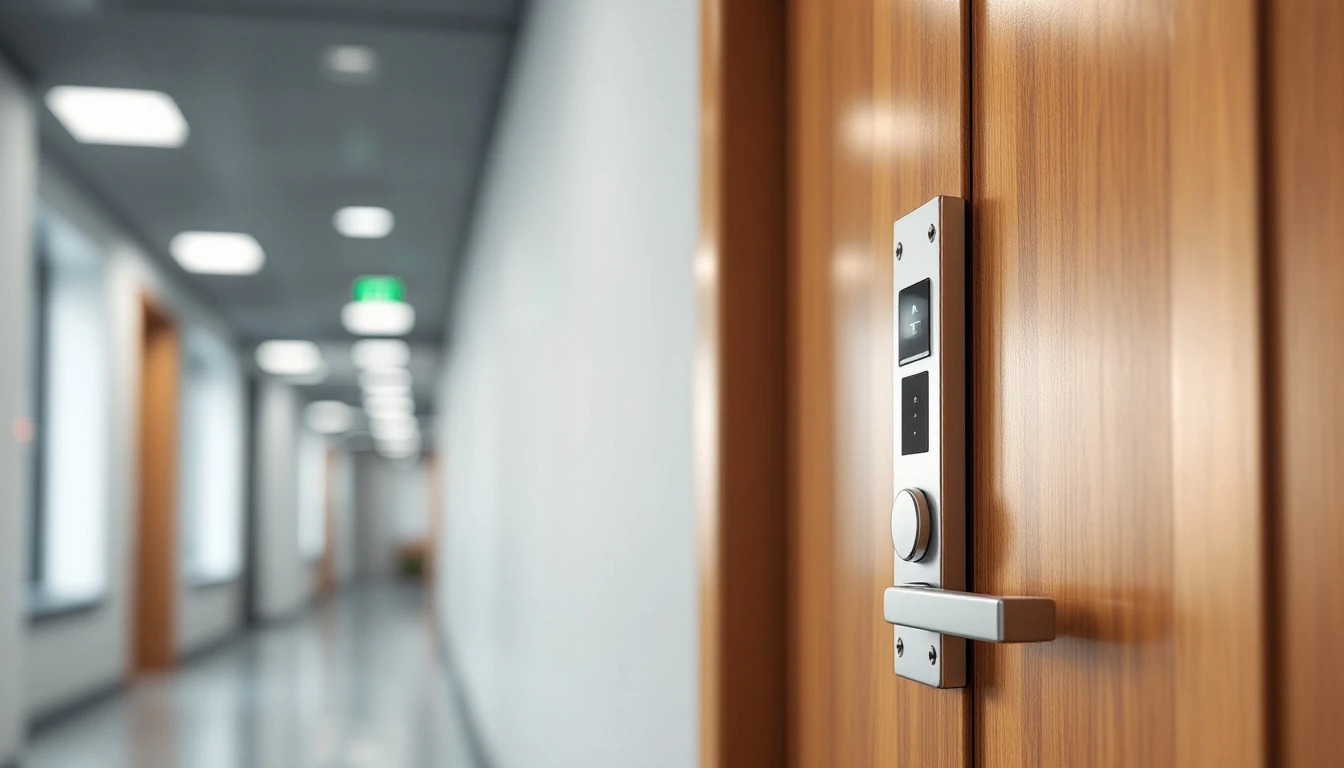
Los Angeles Access Control delivers professional electric panic bar installation to offices, buildings and homes in Rolling Hills. From survey to sign-off, a single accountable crew manages the entire project — wiring, hardware, software and training included.
Estimates are free, you approve a written number before any work starts, and everything we install is backed by warranty. Dial (888) 917-9811 — we're available Sunday–Thursday 6:30 AM–11:30 PM and Friday 6:30 AM–4 PM.
Electric panic bar installation built for Rolling Hills
Rolling Hills lies in the South Bay, and our techs work here weekly. Whether your property is near the Rolling Hills main gate and Portuguese Bend Road, or anywhere off the PCH, we arrive already familiar with the construction styles found across the 90274 area — everything from frameless glass entries to steel man doors — which means fewer surprises and faster installs.
In addition to Rolling Hills, the same crew handles Rolling Hills Estates, Rancho Palos Verdes, Lomita and Palos Verdes Estates, so businesses with several locations enjoy a single point of contact across every site: (888) 917-9811.
Platforms, readers and credentials
Not all credentials are equal: legacy 125 kHz prox cards can be cloned at a mall kiosk, while 13.56 MHz smart credentials and mobile credentials use encryption. Part of every survey is a frank read on your current credential security.
Power is the silent failure point: undersized supplies, dead backup batteries and shared circuits are behind most "ghost" problems. We size power with headroom and battery backup as standard — and every service plan includes battery testing.
Signs it's time for electric panic bar installation
Each departure means another rekey bill — electronic credentials turn that into a ten-second software change.
Something went missing and the entry log is a shrug — an event history would have answered it in minutes.
Doors get propped because entry is inconvenient — and a propped door defeats every lock you own.
Insurance, compliance or a client audit is asking questions you can't answer — controlled, logged entry is increasingly a requirement, not a luxury.
You've lost track of how many keys or credentials are in circulation — each one is standing access you can't revoke.
One of these alone is reason enough to call; two or more mean you're already carrying risk. The call is free: (888) 917-9811.
How a electric panic bar installation project works
1. Assessment. One of our techs surveys the property with you, noting construction types, egress requirements and cable routes. This produces an itemized scope and quote — not a guess.
2. Engineering. We select hardware for each opening, size power supplies with battery backup, plan controller and network locations, and confirm fire and egress code compliance up front.
3. The install. Our own employees — never day labor — pull and label every cable, mount hardware square and solid, and keep the site workable so your operation never stops.
4. Programming. Credentials are enrolled, time zones and holidays programmed, alarm behaviors tuned, and any integrations brought online.
5. Commissioning. Every credential is tested at every relevant door, and your administrators are trained hands-on — plus written documentation.
6. Service after the sale. We keep your as-builts, programming records and parts list on file, so future service calls are fast. Maintenance plans are available without lock-in contracts.
Property types we serve in Rolling Hills
Assembly occupancies — one of our most frequent project types, with proven hardware packages ready to quote.
Fire-rated corridors — a property type we've equipped many times across LA County, with reference sites we're happy to describe.
Hospitals — for which we tailor traffic patterns, user counts and liability exposure, from credential policy to door schedules.
Schools — a property type we've equipped many times across LA County, with reference sites we're happy to describe.
Running something different? We've likely done it — from houses of worship to film stages. Describe it at (888) 917-9811 for a straight answer.
Buyer's guide: pitfalls we see constantly
Closed systems. Some vendors install hardware only they can service. Always ask: "who else can work on this?"
No documentation. When the installer vanishes, undocumented systems become hostage situations. Documentation should be a deliverable, not a favor.
Security that traps people. Non-compliant locking fails inspection and endangers occupants. Compliance has to be in the design, not patched after.
Phone-only quotes. Either the price balloons mid-job or corners get cut. A real survey protects you — we do them free.
Leftover legacy credentials. An upgrade that keeps the old database keeps the old holes. We audit and purge on every system takeover.
However you phrase it, this is the page
However you got here — searching "electronic door lock installation", "electrified door hardware installation", "electric panic bar installation" or a phrase like them — the service behind the words is identical: a licensed technician, the right hardware, and a system commissioned to code in Rolling Hills.
Related work we handle under the same roof spans door position sensor installation, electrified mortise lock installation, electric latch retraction installation, access control door hardware and access control power supply replacement. Combining these in a single project beats hiring for them one at a time — one truck roll, one survey, one accountable vendor.
Why Los Angeles Access Control
Local and accountable. Based at 189 The Grove Drive in Los Angeles, serving every corner of LA County daily. Service calls get a truck, not a ticket number.
Long hours, real answers. Available Sunday–Thursday 6:30 AM–11:30 PM and Friday to 4 PM. Entry failures don't respect business hours, so neither do we.
No vendor lock-in. We install open-platform systems you could have anyone service — and our service keeps you with us by choice, not contract.
Backed work. Every installation carries labor and parts warranties, honored fast.
One trade, deep focus. Access control, intercoms, buzzers, maglocks and gate entry are all we do — not a sideline bolted onto an alarm company.
Written, flat quotes. The number you approve is the number you pay. No surprise line items.
Beyond the reader: real-world security engineering
Weak points get found: a hardened entry next to an unmonitored side door is a diagram of where the loss will happen. Part of every survey is walking the whole perimeter, so budget goes to actual risk, not visible risk.
The log is half the value: held-open alerts, forced entries, credential misuse patterns get pushed to whoever can act, rather than sitting unread until after an incident. Alert tuning is included in every install.
What our electric panic bar installation service includes
We handle everything from door position and REX sensors and electric panic bar kits, through electrified mortise locksets and power transfer hinges. Since a single crew owns the electrical, mechanical and software layers, nothing falls between vendors.
Our techs install industry-standard, non-proprietary equipment wherever possible, which means you're never locked into one vendor for credentials, parts or service. When a proprietary legacy system is already in place, we can usually take it over, service it, or migrate it in phases.
Budgeting for electric panic bar installation
No two buildings price alike since wire paths, frame types and panel locations differ. That's why we quote from a real site walk, not a phone script — so the figure you approve is the figure you pay.
Be cautious with quotes that arrive without a site visit: unknowns get billed later one way or another. We survey for free, take under an hour for most properties, and lock your price in writing.
What usually goes wrong (and how we fix it)
ADA operators tied to access control. We see this constantly — and our fix addresses the root cause, not the symptom.
Fire-rated doors that can't take maglocks. Correct design removes this risk — usually within one scheduled visit.
Inspectors flagging non-compliant egress. Correct design removes this risk — usually in a single service visit.
Panic hardware needing remote dogging. It's among our most common calls — so the repair includes the reason it failed.
Recognize one of these? Call (888) 917-9811 and tell us what's happening — many issues are identified before we even arrive, which keeps the visit short and the invoice small.
Choosing the right approach to electric panic bar installation
Standalone systems fit small scopes: self-contained hardware with onboard programming. What you give up is central control — every change means a walk to the door, and reporting is thin.
Networked on-premise systems centralize control in a local panel or server: rich features, deep integrations, no subscriptions, at the cost of maintaining the server and software yourself. Best for facilities that already have IT staff.
Cloud platforms trade a subscription for zero infrastructure: credentials, schedules and logs live in a web dashboard, local controllers keep decisions at the door even offline. For most LA businesses this is the default recommendation — unless your situation argues otherwise.
Not sure where you land? The free site survey settles it — our recommendation is the least system that fully solves the problem, with reasoning you can hold us to. (888) 917-9811.
Response times and scheduling in Rolling Hills
Entry failures rarely pick convenient moments, so our dispatch hours are long — Sunday–Thursday 6:30 AM to 11:30 PM and Friday to 4 PM — with same-day capacity reserved for urgent calls: failed storefront locks, stuck gates, dead lobby entries. Tell the dispatcher the symptom and we'll triage honestly — not everything needs an emergency rate, and we'll say so.
The test of a contractor is the second call: we schedule warranty work with the same urgency as paid work, and the file we keep on your system means nobody re-learns your building on your dime.
Exactly where we work in and around Rolling Hills
Our Rolling Hills service area covers all of ZIP code 90274 — from the blocks around the Rolling Hills main gate to Portuguese Bend Road. Storefronts, offices, multifamily buildings and homes alike get the same response standard, with quick access via the PCH.
Just outside Rolling Hills, we're equally active in Rolling Hills Estates, Rancho Palos Verdes, Lomita, Palos Verdes Estates as well as Harbor City. Routes frequently chain these areas together, which is part of why response here stays fast.
Terms you'll hear during the project
Fail-safe vs. fail-secure — what a lock does when power drops: fail-safe unlocks (required for some egress doors), fail-secure stays locked (typical for perimeter security). Each opening gets the right one per code and risk.
OSDP — the modern, encrypted reader protocol replacing legacy Wiegand wiring that resists skimming and tamper.
Door position switch (DPS) — a sensor reporting whether the door is physically open or closed, enabling held-open and forced-door alarms.
Request-to-exit (REX) — the sensor or button that releases a locked door from inside so egress is always free.
Anti-passback — a rule preventing a credential from entering twice without exiting, common in garages and secured floors.
Credential — whatever unlocks the door: card, fob, PIN, phone or fingerprint. Modern encrypted credentials resist the cloning that plagues older prox cards.
Built to code — fire, egress and ADA
Locking a door electrically touches fire code, building code and ADA at once. State and local codes govern how locked egress doors must release: free mechanical egress, fail-safe unlocking on fire alarm, request-to-exit coverage and proper signage as each opening requires. Compliance is engineered in before security — security never overrides safe exit.
We also document everything: riser diagrams and test logs are delivered and kept on file, so fire marshals, insurers and future contractors get answers in minutes.
Electric Panic Bar Installation in Rolling Hills: FAQs
What areas do you serve?
The whole of Los Angeles County — every region, from Lancaster to Long Beach, with daily routes through Rolling Hills. If you're unsure, call: (888) 917-9811.
Can you integrate with cameras, alarms or my property software?
Yes — door events paired with video clips, alarm tie-ins, elevator control and property-management integrations come up on most projects. Bring your current system list to the survey and we'll map what connects.
Are you licensed and insured?
Yes. Los Angeles Access Control operates as a licensed and insured contractor working across Los Angeles County, and we pull permits where the jurisdiction requires them.
Do you handle both installation and ongoing service?
Yes — that's central to how we work. Your as-builts, programming records and parts list stay in our file, which makes every future visit faster.
What brands do you install?
Professional, non-proprietary lines including HID, Brivo, Avigilon Alta (Openpath), DoorKing, ButterflyMX and Axis, plus locking hardware from Von Duprin, HES, Securitron and Schlage. The building's needs pick the brand.
Is financing or phased installation available for larger projects?
We phase large projects all the time: secure the critical doors first, add the rest on your budget's schedule, with the design planned so later phases bolt on cleanly.
Will the doors still open if the power goes out?
Yes, that's engineered in. Exiting is always possible: fail-safe hardware unlocks on power loss where code requires, and battery backup keeps systems running through outages. Power-loss behavior is part of our commissioning checklist.
What if my building already has old wiring from a previous system?
Usually that helps: we test and reuse healthy legacy wiring, which meaningfully reduces install cost. We verify every run before trusting it — reuse what passes, replace what doesn't.
What happens to my system if your company weren't around?
A fair question for any vendor: because we install non-proprietary platforms and hand you documentation plus admin credentials mean any qualified integrator could take over. Lock-in isn't our retention strategy.
How fast can you schedule electric panic bar installation in Rolling Hills?
The majority of repairs get same- or next-day slots, and installs usually start within the week. Phones are answered Sunday–Thursday 6:30 AM–11:30 PM and Friday to 4 PM at (888) 917-9811.
Do you give free estimates?
Yes — estimates cost nothing and you're never pressured. You receive a written scope with real hardware and a fixed price up front.
Can you service a system another company installed?
In most cases, yes. We regularly take over orphaned and legacy systems — identifying the hardware, recovering or resetting programming, and documenting everything properly so you're no longer dependent on whoever vanished.
What happens when an employee or tenant leaves?
Their credential is deactivated in seconds — without touching a single lock. For most owners this alone justifies the switch from keys.
Can I manage the system from my phone?
With cloud-based platforms, yes: remote unlock, credential changes and real-time alerts from wherever you are. We'll show you a live demo before you decide.
Is electric panic bar installation disruptive to my business while it's installed?
Minimally. Openings are kept functional during the day, and we schedule disruptive steps off-hours, and clean up every day. Occupied buildings are our normal condition.
How long does an installation take?
A single door is typically done in a day. Larger systems scale with door count and wiring difficulty — your written quote includes a schedule, and we keep to it.
More Magnetic Locks & Electric Strikes in Rolling Hills
Electric Panic Bar Installation in nearby cities
Explore
Book electric panic bar installation in Rolling Hills
Licensed, insured and local. Fast scheduling across Los Angeles County — written quotes, warrantied work.
Call (888) 917-9811Sun–Thu 6:30 AM–11:30 PM · Fri 6:30 AM–4 PM