
Visitor Management Systems in Universal City, CA
Universal City · ZIP 91608 · San Fernando Valley · Repair, Maintenance & Upgrades
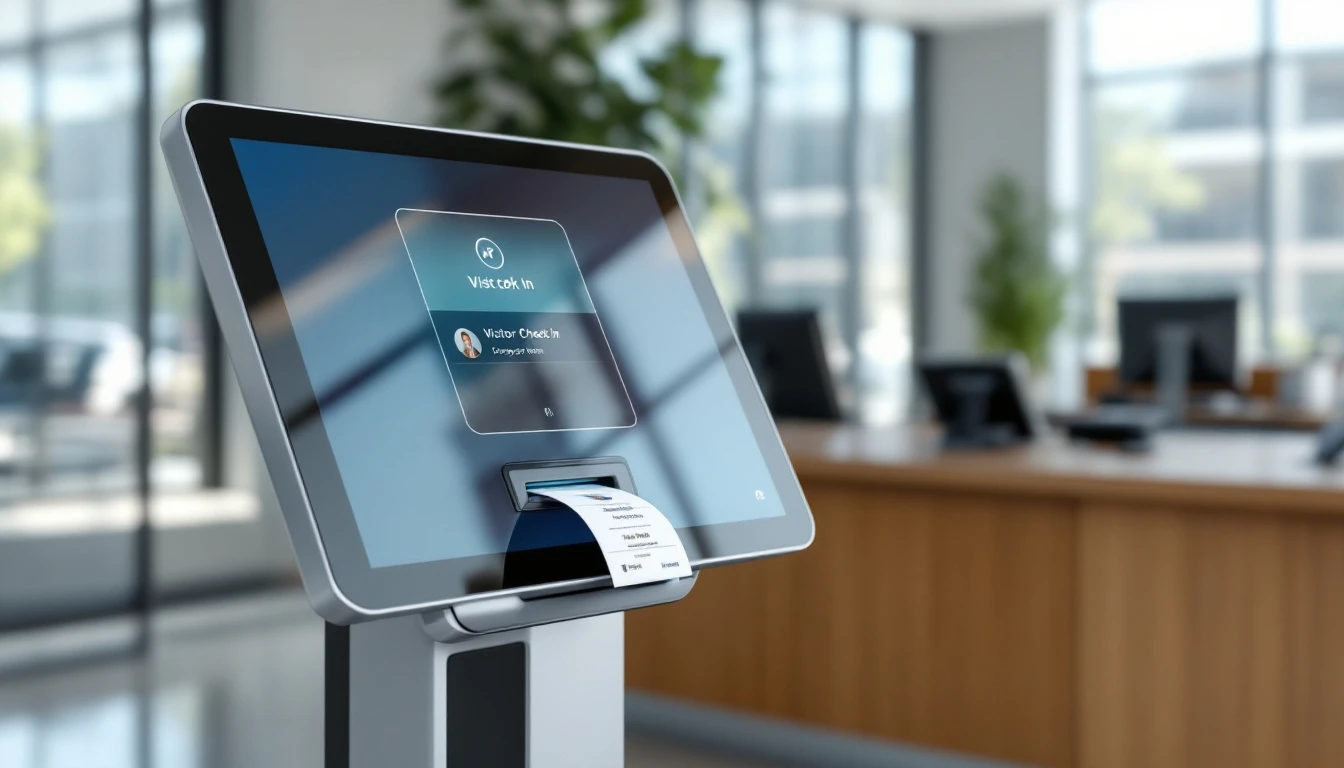
Few things disrupt a property faster than a door that won't lock or won't open. So Universal City businesses turn to Los Angeles Access Control for visitor management systems — same-week scheduling, flat, written quotes, and work that passes inspection the first time.
Phone us today at (888) 917-9811 for a no-obligation site assessment. We answer Sunday through Thursday from 6:30 AM to 11:30 PM and Friday until 4 PM, which means a real person handles your call — not a voicemail maze.
Serving Universal City and the San Fernando Valley
Universal City lies in the San Fernando Valley, and our techs work here weekly. From properties near Lankershim Boulevard or Universal CityWalk, or anywhere off the US-101, we arrive already familiar with the construction styles common to the 91608 area — aluminum storefronts, wood-frame offices, stucco multifamily walk-ups and tilt-up industrial shells — so the right brackets, strikes and readers are on the truck before we knock.
In addition to Universal City, the same technicians serves Toluca Lake, Hollywood Hills, Studio City and North Hollywood, which means multi-site owners enjoy a single point of contact across every site: (888) 917-9811.
Built to code — fire, egress and ADA
An installer who doesn't ask about your fire alarm panel is a red flag. Maglocks in particular are tightly regulated: sensor release, auxiliary push buttons, fire-alarm disconnects and time delays per the California Building Code. Our installations pass inspection because they're designed for inspection — and we pull permits where required.
ADA matters too: reader mounting heights, operating force, auto-operator coordination and clear floor space all factor into reader and hardware placement. Getting it right during design costs nothing; fixing it after a citation is not.
The technology behind the system
Not all credentials are equal: legacy 125 kHz prox cards can be cloned at a mall kiosk, whereas modern smart cards and phone credentials are encrypted. We'll tell you plainly which you have and what it would take to upgrade.
Most system failures trace to power: undersized supplies, dead backup batteries and shared circuits cause the majority of mystery faults. Every system we install gets properly sized, battery-backed, supervised power — and every service plan includes battery testing.
What to expect when you hire us
1. Assessment. One of our techs surveys the property with you, noting construction types, egress requirements and cable routes. This produces an itemized scope and quote — not a guess.
2. Design. We match hardware for each opening, calculate power budgets, plan controller and network locations, and verify life-safety compliance before anything is ordered.
3. The install. Our own employees — not subcontractors — run cabling cleanly, fit hardware precisely, and keep the site workable so your operation never stops.
4. Programming. Credentials are enrolled, auto-lock and unlock schedules set, alarm behaviors tuned, and integrations (video, intercom, elevator) connected.
5. Testing and training. Each opening is tested under power loss, egress and forced-entry conditions, and whoever manages the system gets real training — with documentation left on site and on file with us.
6. Ongoing support. We keep your as-builts, programming records and parts list on file, which means future service calls are fast. Preventive maintenance plans are offered without lock-in contracts.
Signs it's time for visitor management systems
Staff or tenant turnover triggers a locksmith visit every time — a modern system makes that a click, not a service call.
Insurance, compliance or a client audit is asking questions you can't answer — controlled, logged entry is increasingly a requirement, not a luxury.
Doors get propped because entry is inconvenient — convenience failures become security failures.
Something went missing and the entry log is a shrug — audit trails are the first thing investigators and insurers ask for.
Nobody can say how many keys exist for your doors — every unknown copy is an open question about who can walk in.
One of these alone is reason enough to call; stacking several means the risk is live. The call is free: (888) 917-9811.
Problems we solve every week
Visitors wandering unescorted. Correct design removes this risk — often within one scheduled visit.
Contractors with permanent badges. This one comes up weekly — so our fix addresses the root cause, not the symptom.
No evacuation roster. A properly engineered system eliminates this entirely — often in a single service visit.
Paper logbooks nobody can search. This one comes up weekly — and the repair includes the reason it failed.
Recognize one of these? Phone (888) 917-9811 and describe the symptom — a tech can usually narrow it down before rolling a truck, which keeps the visit short and the invoice small.
However you phrase it, this is the page
People describe this work a dozen different ways: owners type "visitor management system installation" or "access control and visitor management integration", property managers tend toward "visitor access control". Each phrase points at the same job — who does this properly in Universal City and answers the phone afterward — and the answer is the same local team: Los Angeles Access Control, (888) 917-9811.
Questions that ride along with this one include . Raise them at the survey — the combined quote is usually the bargain.
The reasons customers stay with us
Non-proprietary by default. Open standards mean you own your system — though most customers never want anyone else.
Written, flat quotes. The number you approve is the number you pay. Change orders only happen when you change the scope.
Warrantied workmanship. Labor and manufacturer warranties on everything we install, honored without arguments.
Hours that match emergencies. Open Sunday–Thursday 6:30 AM–11:30 PM and Friday to 4 PM. Because locked-out tenants and failed storefront doors can't wait until Monday.
One trade, deep focus. Access control, intercoms, buzzers, maglocks and gate entry are all we do — not a sideline bolted onto an alarm company.
A real local company. Based at 189 The Grove Drive in Los Angeles, serving every corner of LA County daily. When something needs attention, we're minutes away — not a ticket queue in another state.
Property types we serve in Universal City
Medical facilities — a property type we've equipped many times across LA County, with reference sites we're happy to describe.
Manufacturing plants — for which we tailor the way the space is actually used, from credential policy to door schedules.
Corporate offices — one of our most frequent project types, with proven hardware packages ready to quote.
Schools — where the system is tuned to traffic patterns, user counts and liability exposure, from credential policy to door schedules.
Have an unusual building? We've likely done it — from houses of worship to film stages. Call (888) 917-9811 for a straight answer.
Avoid these common missteps
Security that traps people. Non-compliant locking fails inspection and endangers occupants. Verify your installer designs for inspection.
Phone-only quotes. Either the price balloons mid-job or corners get cut. Insist on a walkthrough — we do them free.
Old cards left active. An upgrade that keeps the old database keeps the old holes. We audit and purge on every system takeover.
Cheap power supplies. Behind most "haunted" systems is a starved power supply — good power is cheap insurance.
Undocumented installs. When the installer vanishes, undocumented systems become hostage situations. Demand as-builts and admin credentials in writing.
What does visitor management systems cost?
Honest answer: price follows scope — but it's knowable fast. Cost is driven by: how many openings, what each door is made of, how far and how hard the cable runs are, reader and credential choice, and the locking hardware each opening needs.
As rough orientation: a single-door standalone system is the economy entry point; multi-door networked systems add per-door cost with shared head-end; cloud systems trade some hardware cost for subscription; and gate and intercom work is quoted per device and distance. Your exact number comes from a free survey — schedule at (888) 917-9811.
Comparing your options
Standalone systems suit one or two doors with simple needs: self-contained hardware with onboard programming. The trade-off is management — every change means a walk to the door, and reporting is thin.
On-premise panels remain the right call for owners who want zero recurring fees — a configuration we install regularly — but they demand someone who owns backups and updates.
Cloud access control swap server headaches for a monthly fee: everything is managed from anywhere, local controllers keep decisions at the door even offline. For most LA businesses this is the default recommendation — though we'll say so only if it actually fits yours.
Not sure where you land? The free site survey settles it — we'll recommend the cheapest option that actually solves your problem, and put the reasoning in writing. (888) 917-9811.
Inside a professional visitor management systems project
The work includes it all — check-in kiosks and tablets and host notification apps, through badge printers and temporary mobile passes. Since a single crew handles hardware, low-voltage wiring and software alike, accountability never splits.
Each opening gets components chosen for its actual door and frame: locking devices selected around life-safety code, weather- and vandal-rated readers where needed, and power sized with headroom for battery backup. That matching step is where cut-rate installs go wrong — and where ours last for years.
Scheduling, emergencies and follow-through
Door and gate failures ignore business hours, which is why we answer — Sunday–Thursday 6:30 AM to 11:30 PM and Friday to 4 PM — with same-day capacity reserved for urgent calls: a storefront that won't lock, a gate stuck open, a lobby door trapping deliveries. Describe the symptom when you call and you'll get an honest triage — if it can safely wait for a standard slot, we'll tell you.
The job doesn't end at the invoice: your documentation stays on file, warranty support is a phone call, and future additions quote quickly because we already know your site.
Exactly where we work in and around Universal City
In Universal City we cover the entirety of ZIP code 91608 — including the areas near Universal Studios Hollywood to Universal CityWalk, out to Lankershim Boulevard. Storefronts, offices, multifamily buildings and homes alike see the same technicians and the same pricing, with quick access via the US-101.
Bordering communities get identical coverage: Toluca Lake, Hollywood Hills, Studio City, North Hollywood and Hollywood. Owners with properties in more than one of these areas consolidate them under one service relationship — a single point of contact: (888) 917-9811.
What "secure" actually requires
Hardware alone doesn't make a door secure. The details decide: can the lock wiring be reached from outside? will a propped door raise an alarm? can the cards be cloned at a kiosk? Is the controller on battery backup? Our installs answer all of these by design.
Good design assumes bad days: power loss, dead internet, alarm activation — each has a correct, code-driven answer that gets engineered in, tested during commissioning, not during the real thing.
Key terms, plainly explained
Door position switch (DPS) — a sensor reporting whether the door is physically open or closed, the basis for propped-door and forced-entry alerts.
Request-to-exit (REX) — the sensor or button that releases a locked door from inside so egress is always free.
Fail-safe vs. fail-secure — the lock's behavior on power loss: fail-safe unlocks (required for some egress doors), fail-secure stays locked (typical for perimeter security). Each opening gets the right one per code and risk.
Credential — whatever unlocks the door: card, fob, PIN, phone or fingerprint. Modern encrypted credentials resist the cloning that plagues older prox cards.
Access level — which doors, at which times, for which users. Good access-level design is the difference between a tidy system and chaos.
Anti-passback — logic that stops one fob from being passed back to admit a second person, common in garages and secured floors.
Visitor Management Systems in Universal City: FAQs
What brands do you install?
Professional, non-proprietary lines including HID, Brivo, Avigilon Alta (Openpath), DoorKing, ButterflyMX and Axis, plus locking hardware from Von Duprin, HES, Securitron and Schlage. The building's needs pick the brand.
Do you give free estimates?
Yes — site surveys and quotes are free and carry no obligation. You receive a written scope with real hardware and a fixed price up front.
How long does an installation take?
One door: usually a day. Multi-door projects run from a few days to a few weeks depending on count and conditions — your written quote includes a schedule, and we keep to it.
Do you offer maintenance plans?
Yes — preventive visits covering batteries, firmware, testing and documentation, on terms you can cancel. Plans are optional — the install is built to last regardless.
Can the system lock and unlock doors on a schedule?
Yes — schedules are standard: front doors can unlock for business hours and secure themselves at close, with holiday calendars and exception dates handled automatically. No more "who forgot to lock up".
Are you licensed and insured?
Yes. Los Angeles Access Control operates as a licensed and insured contractor working across Los Angeles County, and we pull permits where the jurisdiction requires them.
Is visitor management systems disruptive to my business while it's installed?
Minimally. We stage work so doors stay usable, and we schedule disruptive steps off-hours, and clean up every day. Occupied buildings are our normal condition.
Is financing or phased installation available for larger projects?
Phasing is routine: secure the critical doors first, add the rest on your budget's schedule, with the design planned so later phases bolt on cleanly.
Do you work on occupied buildings without disrupting tenants?
Yes, most of our work is in occupied buildings. We stage the work so entries keep functioning and coordinate notice with your manager.
Will the doors still open if the power goes out?
Yes — by design. Egress is always free: fail-safe hardware unlocks on power loss where code requires, and battery backup keeps systems running through outages. Power-loss behavior is part of our commissioning checklist.
How fast can you schedule visitor management systems in Universal City?
Most service calls are scheduled same-day or next-day, and new installations typically begin within days of an approved quote. Phones are answered Sunday–Thursday 6:30 AM–11:30 PM and Friday to 4 PM at (888) 917-9811.
Can you service a system another company installed?
In most cases, yes. We take over orphaned and legacy systems — identifying the hardware, recovering or resetting programming, and documenting everything properly so you're never stranded again.
What happens when an employee or tenant leaves?
You deactivate the fob, card or phone credential instantly — no rekeying, no lock changes, no cost. For most owners this alone justifies the switch from keys.
Can I manage the system from my phone?
With cloud-based platforms, yes: unlock doors remotely, grant visitor access, review events and get alerts from wherever you are. We'll show you a live demo before you decide.
Do you handle both installation and ongoing service?
Yes — and that continuity is the point. Your as-builts, programming records and parts list stay in our file, so every later call is faster and cheaper.
More Repair, Maintenance & Upgrades in Universal City
Visitor Management Systems in nearby cities
Explore
Book visitor management systems in Universal City
Licensed, insured and local. Fast scheduling across Los Angeles County — written quotes, warrantied work.
Call (888) 917-9811Sun–Thu 6:30 AM–11:30 PM · Fri 6:30 AM–4 PM