
Pedestrian Entry Control Systems in Valley Village, CA
Valley Village · ZIP 91607 · San Fernando Valley · Gate & Parking Access Control
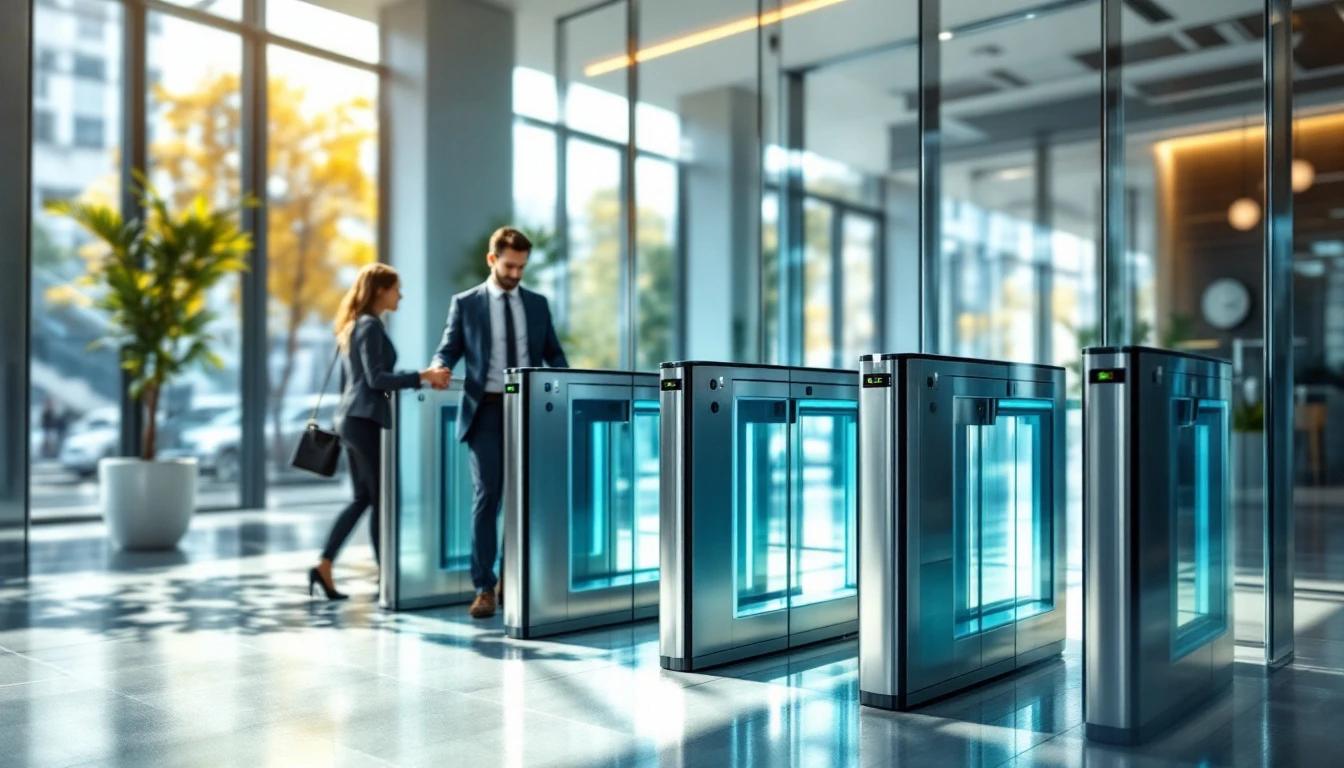
Searching for pedestrian entry control systems in Valley Village, you need a licensed low-voltage contractor who shows up with the correct hardware on the truck — not a call center that resells your job to an unknown subcontractor. Los Angeles Access Control builds and supports entry systems across Valley Village and the surrounding communities, and each project is handled by our employed technicians, start to finish.
Phone us directly at (888) 917-9811 to get a free site assessment. We pick up seven days' worth of long hours — 6:30 AM to 11:30 PM Sunday–Thursday, Fridays to 4 PM, which means a local human handles your call, not an answering service.
Pedestrian entry control systems built for Valley Village
Dispatching Valley Village daily means our estimates reflect real local conditions. Buildings near Magnolia Boulevard often mix old risers with modern suite build-outs, and our techs carry the adapters and hardware that those jobs demand. Being minutes off the US-101, same-day calls in 91607 are reached quickly.
Alongside Valley Village, the very same crew handles North Hollywood, Studio City, Toluca Lake and Sherman Oaks, which means property managers with scattered portfolios enjoy a single point of contact across every site: (888) 917-9811.
Inside a professional pedestrian entry control systems project
A complete installation spans the whole system of components: ADA swing lanes, integrated readers, optical turnstiles, along with tripod turnstiles. Our crews never hand off loose ends — wiring is labeled, panels are documented, and administrators are trained before we leave.
Our techs install industry-standard, non-proprietary equipment wherever possible, which means your building is never hostage to a single manufacturer for future parts and service. When you already own a closed system, we can usually take it over, service it, or migrate it in phases.
The security details that separate good installs from bad ones
Weak points get found: a hardened entry next to an unmonitored side door is a diagram of where the loss will happen. Our surveys look at the building the way an intruder would, so budget goes to actual risk, not visible risk.
The log is half the value: held-open alerts, forced entries, credential misuse patterns reach the right person in real time, rather than sitting unread until after an incident. We configure alerting as part of commissioning, not as an upsell.
From first call to final walkthrough
1. Site survey. A technician walks the property with you, documenting door and frame construction, existing wiring, power availability and network paths. This produces an itemized scope and quote — with real model numbers.
2. Engineering. We match hardware for each opening, size power supplies with battery backup, map panel locations, and verify life-safety compliance up front.
3. The install. In-house technicians — not subcontractors — run cabling cleanly, fit hardware precisely, and work around your business hours with minimal disruption.
4. Programming. Users, schedules and access levels are configured, auto-lock and unlock schedules set, alerts configured, and integrations (video, intercom, elevator) connected.
5. Commissioning. Each opening is tested under power loss, egress and forced-entry conditions, and your administrators are trained hands-on — with documentation left on site and on file with us.
6. Ongoing support. We keep your as-builts, programming records and parts list on file, which means future service calls are fast. Maintenance plans are available but never required.
Terms you'll hear during the project
Access level — the bundle of doors and schedules a credential is allowed. Good access-level design is the difference between a tidy system and chaos.
Fail-safe vs. fail-secure — the lock's behavior on power loss: fail-safe releases (required for some egress doors), fail-secure holds (typical for perimeter security). Choosing per-door is a design decision, not a default.
Credential — whatever unlocks the door: card, fob, PIN, phone or fingerprint. Modern encrypted credentials resist the cloning that plagues older prox cards.
Door position switch (DPS) — a sensor reporting whether the door is physically open or closed, the basis for propped-door and forced-entry alerts.
Request-to-exit (REX) — the sensor or button that releases a locked door from inside so exit never requires a credential.
OSDP — the modern, encrypted reader protocol replacing legacy Wiegand wiring that resists skimming and tamper.
Signs it's time for pedestrian entry control systems
People prop doors to avoid fumbling with keys — and a propped door defeats every lock you own.
Nobody can say how many keys exist for your doors — each one is standing access you can't revoke.
An incident happened and there's no record of who came in — an event history would have answered it in minutes.
Your existing system is down more than it's up — the repair-versus-replace math eventually flips.
Insurance, compliance or a client audit is asking questions you can't answer — controlled, logged entry is increasingly a requirement, not a luxury.
Any one of these justifies a conversation; two or more mean you're already carrying risk. A phone consult costs nothing: (888) 917-9811.
However you phrase it, this is the page
The same need wears many labels: owners type "turnstile installation" or "pedestrian entry control systems", property managers tend toward "office turnstile access control" or "turnstile access control". They're all asking the same question — who can design, install and stand behind this in Valley Village — and this page exists to answer it: Los Angeles Access Control, (888) 917-9811.
Nearby needs we're asked about on the same calls include security turnstile installation. If any of those apply to your property, mention them during the survey — scoping them together is where the savings hide.
What makes us different
A real local company. Based at 189 The Grove Drive in Los Angeles, serving every corner of LA County daily. Service calls get a truck, not a ticket number.
No vendor lock-in. Open standards mean you own your system — and our service keeps you with us by choice, not contract.
Transparent pricing. The number you approve is the number you pay. No surprise line items.
Long hours, real answers. Available Sunday–Thursday 6:30 AM–11:30 PM and Friday to 4 PM. Because locked-out tenants and failed storefront doors can't wait until Monday.
Warrantied workmanship. Every installation carries labor and parts warranties, honored without arguments.
One trade, deep focus. Access control, intercoms, buzzers, maglocks and gate entry are all we do — not a sideline bolted onto an alarm company.
Buyer's guide: pitfalls we see constantly
Ignoring egress code. A maglock without compliant release mechanisms is a violation and a liability. Compliance has to be in the design, not patched after.
Pricing without a site visit. Either the price balloons mid-job or corners get cut. A real survey protects you — we do them free.
Proprietary lock-in. Certain platforms handcuff you to one company forever. Always ask: "who else can work on this?"
No documentation. No as-builts means the next tech starts blind. Demand as-builts and admin credentials in writing.
Undersized power. Behind most "haunted" systems is a starved power supply — good power is cheap insurance.
Where pedestrian entry control systems makes the biggest difference
Gyms — where the system is tuned to the way the space is actually used, down to schedules and alert rules.
Industrial sites — one of our most frequent project types, with reference sites we're happy to describe.
Corporate lobbies — where the system is tuned to the way the space is actually used, down to schedules and alert rules.
Stadium and venue gates — where we tailor the way the space is actually used, from credential policy to door schedules.
Running something different? We've likely done it — from marinas to machine shops. Call (888) 917-9811 and we'll talk through options.
What does pedestrian entry control systems cost?
No two buildings price alike because conditions behind the walls differ. That's why we quote from a real site walk, not a phone script — so the figure you approve is the figure you pay.
Be cautious with phone-only pricing: unknowns get billed later one way or another. Our surveys are free, take under an hour for most properties, and produce a fixed written quote.
Built to code — fire, egress and ADA
Locking a door electrically touches fire code, building code and ADA at once. State and local codes govern when and how locked doors must let people out: motion-sensor REX, push-to-exit buttons, fire-alarm tie-ins and door release on power loss where applicable. We design every opening around those rules first — security never overrides safe exit.
ADA matters too: reader mounting heights, operating force, auto-operator coordination and clear floor space all factor into reader and hardware placement. Designed-in compliance is free; retrofitting it after a complaint is expensive.
Problems we solve every week
Gym members passing cards back. We see this constantly — and our fix addresses the root cause, not the symptom.
Construction site workforce tracking. A properly engineered system eliminates this entirely — often faster than owners expect.
Headcount accuracy for life safety. The right hardware and programming make this a non-issue — usually in a single service visit.
Lobbies with no tailgating control. A properly engineered system eliminates this entirely — usually faster than owners expect.
Dealing with something similar? Phone (888) 917-9811 and describe the symptom — a tech can usually narrow it down before rolling a truck, which keeps the visit short and the invoice small.
Response times and scheduling in Valley Village
Our county-wide routing works in your favor, someone is rarely far from Valley Village. Most repairs land same- or next-day; installs generally begin within days of approval. The dispatcher who answers knows the schedule in real time.
The test of a contractor is the second call: warranty visits get the same priority as new sales, and the file we keep on your system means nobody re-learns your building on your dime.
Exactly where we work in and around Valley Village
Dispatches in Valley Village span ZIP code 91607, including Magnolia Boulevard and Laurel Canyon Boulevard. Positioned in the San Fernando Valley, minutes from the SR-170, response windows here are among our best.
Bordering communities get identical coverage: North Hollywood, Studio City, Toluca Lake, Sherman Oaks and Valley Glen. Multi-property owners across these cities typically put everything under one account — one number to call for all of it: (888) 917-9811.
Comparing your options
Standalone hardware sits at the budget end: fine for a storage room or a single office door, though it leaves you without real records or remote control.
On-premise panels remain the right call for owners who want zero recurring fees — we install plenty of them — but they demand someone who owns backups and updates.
Cloud access control swap server headaches for a monthly fee: everything is managed from anywhere, local controllers keep decisions at the door even offline. It's what we'd put in our own building — though we'll say so only if it actually fits yours.
Unsure which fits? That's what the free survey answers — our recommendation is the least system that fully solves the problem, and put the reasoning in writing. (888) 917-9811.
Platforms, readers and credentials
Our bench covers the industry's main platforms: HID readers and credentials, Brivo and Avigilon Alta (Openpath) cloud access control, DoorKing and ButterflyMX entry systems, Axis door controllers, and the trusted locking brands — Von Duprin, HES, Securitron, Schlage. Brand choice follows your building's needs, not a distributor quota.
Most system failures trace to power: cheap power supplies and neglected batteries are behind most "ghost" problems. We size power with headroom and battery backup as standard — and every service plan includes battery testing.
Pedestrian Entry Control Systems in Valley Village: FAQs
What if my building already has old wiring from a previous system?
Usually that helps: we test and reuse healthy legacy wiring, which cuts labor significantly. The survey includes testing what's in the walls — reuse what passes, replace what doesn't.
Do you offer maintenance plans?
Yes — scheduled inspections, battery replacement, firmware updates and priority response, without long lock-in contracts. Plans are optional — our work holds up either way.
Is pedestrian entry control systems disruptive to my business while it's installed?
Rarely. We stage work so doors stay usable, and we schedule disruptive steps off-hours, and leave the site clean daily. Occupied buildings are our normal condition.
How long does an installation take?
One door: usually a day. Larger systems scale with door count and wiring difficulty — your written quote includes a schedule, and we keep to it.
Do you give free estimates?
Yes — site surveys and quotes are free and carry no obligation. You receive a written scope with real hardware and a fixed price before any work begins.
What happens when an employee or tenant leaves?
You deactivate the fob, card or phone credential instantly — no rekeying, no lock changes, no cost. That single capability usually pays for the system.
Can the system lock and unlock doors on a schedule?
Yes — schedules are standard: auto-unlock during business hours, auto-secure at night, including holidays and special dates. No more "who forgot to lock up".
Are you licensed and insured?
Absolutely. Los Angeles Access Control operates as a licensed and insured contractor performing work across Los Angeles County, and we pull permits where the jurisdiction requires them.
What areas do you serve?
The whole of Los Angeles County — every region, from Lancaster to Long Beach, with daily routes through Valley Village. If you're unsure, call: (888) 917-9811.
What brands do you install?
Industry-standard platforms such as HID, Brivo, Avigilon Alta (Openpath), DoorKing, ButterflyMX and Axis, with commercial-grade locking hardware throughout. We spec to your building, not to a quota.
How fast can you schedule pedestrian entry control systems in Valley Village?
Most service calls get same- or next-day slots, and new installations typically begin within days of an approved quote. Phones are answered Sunday–Thursday 6:30 AM–11:30 PM and Friday to 4 PM at (888) 917-9811.
Can you service a system another company installed?
In most cases, yes. We take over orphaned and legacy systems — stabilizing them, recovering admin access and bringing documentation up to date so you're never stranded again.
Will the doors still open if the power goes out?
Yes, that's engineered in. Exiting is always possible: hardware is selected per code so people can always exit, and battery-backed power rides through typical outages. Power-loss behavior is part of our commissioning checklist.
Can I manage the system from my phone?
With cloud-based platforms, yes: unlock doors remotely, grant visitor access, review events and get alerts from any browser or the mobile app. We'll show you a live demo before you decide.
Do you handle both installation and ongoing service?
Yes — and that continuity is the point. Your as-builts, programming records and parts list stay in our file, so every later call is faster and cheaper.
Can you integrate with cameras, alarms or my property software?
In most cases, yes — video, intrusion, elevator and PMS integrations are routine for us. We'll inventory what you have and tell you exactly what can talk to what.
More Gate & Parking Access Control in Valley Village
Pedestrian Entry Control Systems in nearby cities
Explore
Book pedestrian entry control systems in Valley Village
Licensed, insured and local. Fast scheduling across Los Angeles County — written quotes, warrantied work.
Call (888) 917-9811Sun–Thu 6:30 AM–11:30 PM · Fri 6:30 AM–4 PM